
Reviewed · MUSEUMS
San Francisco Gregangelo Museum – Immersive Art Garden Tour
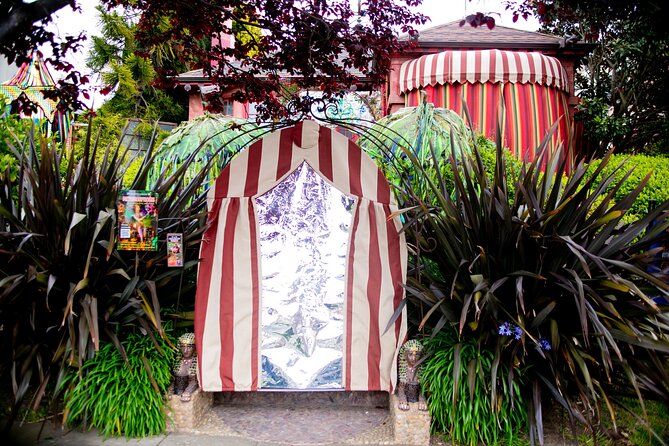
The Gregangelo Museum is not a conventional museum, and that is the point. In a quiet San Francisco neighborhood, you enter a highly decorated art world where the guide leads your private group through games, riddles, and personal questions. The goal is to solve the Riddle of the Sphinx while moving through three fanciful gardens.
I like the small private format, since your group is not mixed with strangers. I also like the way the experience asks you to participate instead of simply stare at displays. The main consideration is the price: at $127 per person for about 90 minutes, this makes sense as a special occasion or unusual San Francisco outing, not as a quick museum stop.
Key points to know
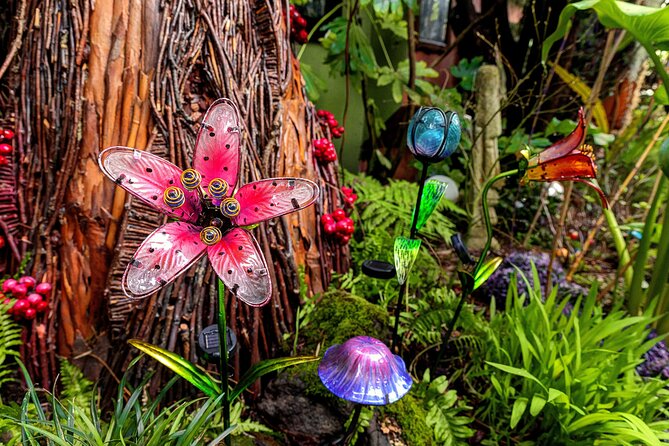
- Three themed gardens: The Garden of Youth, Garden of Life, and Garden of Wisdom each offer a different mood and set of ideas.
- A private experience: Only your group participates, making it suitable for couples, families, close friends, and birthday outings.
- Guided by performers and facilitators: Nick and Marcelo are among the guides associated with this experience, and the guide’s approach shapes much of the visit.
- More than visual art: You solve riddles, play games, and share thoughts as the story unfolds.
- A quiet neighborhood setting: The museum is at 225 San Leandro Way in Saint Francis Wood, away from the usual central San Francisco sightseeing route.
- Bring an open mind: The experience can become emotional or reflective, and it is not designed for people who want a purely passive gallery visit.
A San Francisco museum with a different idea
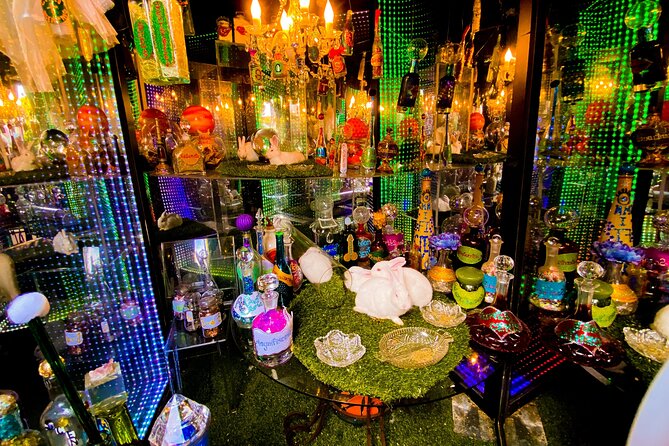
Many museums ask you to keep your distance from the art. Gregangelo Museum asks you to step into its strange, playful world and respond to it. The setting combines elaborate art installations with guided theater, riddles, and conversation.
The Riddle of the Sphinx centers on three gardens. Each one represents a stage or quality of human experience. The Garden of Youth brings in innocence and play. The Garden of Life explores sensuality and feeling. The Garden of Wisdom turns toward the unknown and the questions that have no tidy answer.
That structure gives the 90-minute visit a clear path. You are not simply wandering through a decorated house with no explanation. Your guide uses the setting to lead your group from one idea to the next.
I would not describe this as a standard sightseeing stop. You will not come here for San Francisco history, paintings by famous artists, or a quiet hour of looking. You come for a guided encounter with theatrical art and with the people in your group.
More museums and galleries in San Francisco:
- The Walt Disney Family Museum Admission Ticket in San Francisco
★ 5.0 · 203 reviews - San Francisco Museum of Modern Art General Admission Ticket
★ 4.5 · 143 reviews - SF: San Francisco Museum of Modern Art (SFMOMA) Entry Ticket
★ 4.5 · 124 reviews
Starting at 225 San Leandro Way
The meeting point is 225 San Leandro Way in Saint Francis Wood. This matters because the museum is not near the city’s familiar visitor circuit. You may need to plan your route instead of adding it casually between Fisherman’s Wharf and the Ferry Building.
The location also helps shape the mood. You leave the most heavily visited parts of San Francisco and arrive in a residential neighborhood. That contrast is part of the appeal. The experience feels like a discovery tucked into the city rather than another large attraction built for crowds.
The tour begins and ends at the same meeting point. Confirmation is provided when you book, and the activity accepts mobile tickets. Public transportation is nearby, though the supplied details do not specify the exact route or walking time from a particular station.
Plan to arrive with enough time to find the address. The private format means the guide is expecting your group, and a rushed arrival would be a poor way to begin an experience built around attention and participation.
Garden of Youth: play before explanation
The first garden is the Garden of Youth. Its theme is innocence, and the experience uses play to bring you into the story.
This is an important opening choice. If the tour began with a serious personal question, it could feel forced. Instead, the playful setting gives you permission to loosen up. You may be asked to solve something, follow a clue, or take part in a game as you examine the art around you.
The exact puzzles can vary in how they feel to each group, and it is best not to expect a conventional escape-room format. The purpose is not simply to reach an answer as fast as possible. The riddle gives the guide a way to connect the objects, the garden, and your group’s reactions.
I would expect this part to work best when everyone joins in. If one person hangs back and refuses every invitation to play, the group loses some of the energy the garden is meant to create.
At the same time, you do not need to be a performer. The guide’s role is to help the group through the experience. Guides such as Nick and Marcelo have been praised for explaining the space, noticing small details, and helping people engage with the activity at their own pace.
Garden of Life: personal conversation and connection
The Garden of Life shifts the focus toward sensuality. That word can sound grand, but the useful way to understand it is as a turn toward the senses, relationships, emotion, and the feeling of being alive.
This portion can make the experience more personal than a normal art visit. You may find yourself discussing an idea with your partner, family members, or friends rather than simply trying to solve a puzzle on your own. The guide helps connect the art to the people in the room.
That is one reason the activity works well for a couple or small group with an existing bond. A birthday outing, anniversary activity, or close-friends excursion can gain something from the shared focus. You are given a reason to pay attention to one another, not just to the artwork.
The personal tone is also the main caution. Some people want a museum visit to remain safely external. Here, the experience may invite emotional openness, self-reflection, or an unexpected conversation. It is not therapy, but the format can feel therapeutic to some people because it encourages sharing and reflection.
You should choose this tour with the right expectations. It is not a test of intelligence, and there is no prize for producing the cleverest answer. The value comes from the exchange between the art, the guide, and your group.
A different sort of San Francisco day, for when the fog rolls in:
- Muir Woods and Sausalito (Return by Bus or Ferry)
★ 4.5 · 5,098 reviews - Big Bus SF: Hop-on Hop-off Tour with 17 Stops and Sunset Option
★ 4.0 · 4,539 reviews - Napa and Sonoma Wine Country Full-Day Tour from San Francisco
★ 4.5 · 4,455 reviews - Small Group Yosemite and Giant Sequoias Day Trip from San Francisco
★ 5.0 · 3,671 reviews
Garden of Wisdom: facing the unknown
The final garden, the Garden of Wisdom, turns toward the unknown. This gives the Riddle of the Sphinx its most reflective section.
The idea of wisdom here is not a lecture or a list of facts. Instead, the garden asks you to consider uncertainty and what you carry away from the experience. The puzzles and objects become a framework for thinking about yourself and the people beside you.
This final section may feel especially meaningful if you have allowed the earlier stages to work on you. The Garden of Youth encourages play. The Garden of Life encourages connection. The Garden of Wisdom asks what those moments mean.
The experience does not promise one fixed interpretation. That is useful because your group may respond differently. One person may focus on the visual details, another on the riddle, and another on the conversation. A skilled guide can help hold those different reactions together.
The setting contains many small details, and you should resist the urge to rush. The tour lasts about an hour and a half, which is enough time for the three gardens but not enough for a long, leisurely examination of every object. Listen closely when the guide points out something unusual, since the explanation may connect a small visual detail to the larger story.
The guide makes a major difference
This is a guided experience, so the person leading your group matters. Nick and Marcelo are named as guides associated with past visits. Descriptions of their work emphasize clear explanations, warmth, theatrical ability, and skill at helping a group move from lighthearted play into more personal discussion.
That mix is not easy to manage. A guide who treats the museum like a standard house tour could flatten the experience. A guide who pushes too hard could make it uncomfortable. The best approach seems to be flexible: explain the art, keep the games moving, and let each group decide how personal it wants to become.
Because the activity is private, the guide can respond to your particular group. A couple may receive different prompts than a family or a group of friends. The format also lets you ask questions and take the pace of the encounter into account.
You should not assume that every guide will have precisely the same style. Nick and Marcelo have different personalities, and the experience is partly shaped by that human element. Still, the available information points to the guide as more than someone who gives directions. This person acts as narrator, facilitator, and host.
Why the private format matters
Private touring is a major benefit here. Only your group takes part, so you do not have to solve a riddle in front of strangers or share an emotional moment with people you have never met.
That privacy is especially useful for families with several generations. The experience has been suitable for groups that included an 89-year-old participant, which suggests that the personal and visual parts can appeal across ages. The details do not establish specific accessibility features, so you should ask the provider about mobility needs before booking.
The same privacy helps couples. One couple used the experience for a birthday, finding the shared activity more memorable than simply looking at art together. That makes sense: the tour gives you a sequence of tasks and ideas to discuss afterward.
It can also work for friends who know one another well. The experience may reveal new sides of people you have known for years. That possibility is part of the fun, but it is also why I would not book it for a group that wants a predictable, low-pressure attraction.
What the $127 price means
The listed price is $127 per person. That is a high cost for a 90-minute activity, especially when compared with a public museum admission or a self-guided gallery visit.
You are paying for more than access to a space. The fee covers a private booking, a guide, an interactive format, and an unusual art environment. The guide’s role is central, and the group does not simply walk through on its own. A digital storybook is included as well.
The value depends on what you want from San Francisco. If you measure value by minutes of sightseeing, this is expensive. If you want a one-of-a-kind activity for a birthday, anniversary, family gathering, or close-friends outing, the private setting may justify the cost.
I would also compare it with other special experiences rather than with regular museum tickets. This is closer to a small piece of participatory theater combined with an art visit. You are buying a shared memory and a guided conversation, not just a collection of objects.
For a solo visitor, the price would be harder to justify because the activity is built around a private group. For two or more people who want a thoughtful shared experience, the calculation improves.
Who should book the Riddle of the Sphinx
I would recommend it to you if you enjoy unusual art, playful puzzles, and guided experiences that can become personal. It is a strong choice for couples, families, and friends who want something more memorable than another viewpoint or standard museum.
You should also like surprises. The experience works partly because you do not know every step in advance. Giving away the specific puzzles would weaken the effect, and the museum’s appeal depends on discovering how the gardens connect.
I would be more cautious if you prefer historical context, famous works, or a self-paced visit. You may also want to skip it if you dislike being invited to participate or discuss personal ideas.
The activity is private, and most people can participate. Service animals are allowed, and the site is near public transportation. Those details help, but the information does not provide a full accessibility description, so contact the provider if you need specific accommodations.
The experience is non-refundable and cannot be changed after booking. That makes it important to confirm your schedule before paying, especially given the $127 price.
Is this unusual San Francisco tour worth booking?
The Gregangelo Museum’s Riddle of the Sphinx is worth booking when you want San Francisco at its most inventive and personal. Its three gardens give the visit shape, while the private guide keeps the experience focused on your group.
I would choose it for a special occasion or for a small group that enjoys talking, playing, and seeing art in an unconventional setting. I would not choose it as a quick first-time overview of San Francisco, and I would not pay the price simply to look around.
Book it if you want an intimate art experience that may leave you thinking about yourself and your companions. Skip it if you want a traditional museum, a low-cost attraction, or complete control over your own pace.
FAQ
Where is the Gregangelo Museum experience located?
It begins at 225 San Leandro Way, San Francisco, California 94127, in the Saint Francis Wood neighborhood.
How long does the Riddle of the Sphinx experience last?
The experience lasts approximately 1 hour and 30 minutes.
Is the activity private?
Yes. Only your group participates in the private tour.
What does the tour include?
Admission to the experience and a digital storybook are included.
What are the three gardens?
The experience includes the Garden of Youth, the Garden of Life, and the Garden of Wisdom.
What does the group do during the tour?
You play games and solve riddles connected to the three gardens and the Riddle of the Sphinx.
Can I use a mobile ticket?
Yes. Mobile tickets are accepted.
Can I cancel or change the booking?
No. The experience is non-refundable and cannot be changed for any reason.
Newest San Francisco write-ups
- Yosemite Valley: 3-Day Lodging Adventure★ 4.9 · 9 reviews
- From San Francisco: Yosemite & Tahoe Sierras 4-Day Trip★ 5.0 · 4 reviews
- San Francisco: Turkish Mosaic Lamp Workshop★ 4.2 · 12 reviews
- From San Francisco: Yosemite Private Full-Day Trip★ 5.0 · 13 reviews
- San Francisco Airport 1-Way Transfer to/from the City★ 4.8 · 36 reviews
- Hop-On Hop-Off Deluxe Bus Tour of San Francisco: 2 Days, 20 Stops★ 3.5 · 12 reviews
- Redwoods of Marin and Mt. Tamalpais Walking Tour with Local Guide★ 5.0 · 9 reviews
- Yosemite and Tahoe from San Francisco: 4 Day Sierra Nevada Tour★ 5.0 · 13 reviews
Museums, compared.

San Francisco Museum of Modern Art General Admission Ticket
Read our review →
San Francisco Museum of Modern Art (SFMOMA) Entry Ticket
Read our review →


San Francisco Gregangelo Museum – Garden and Interior Combo Tour
Read our review →
San Francisco Gregangelo Museum – Immersive Interior Art Tour
Read our review →
San Francisco Gregangelo Museum – Immersive Kids’ Tour
Read our review →
San Francisco Gregangelo Museum – Lunch & Behind the Scenes Tour
Read our review →Browse the lists this tour appears in