
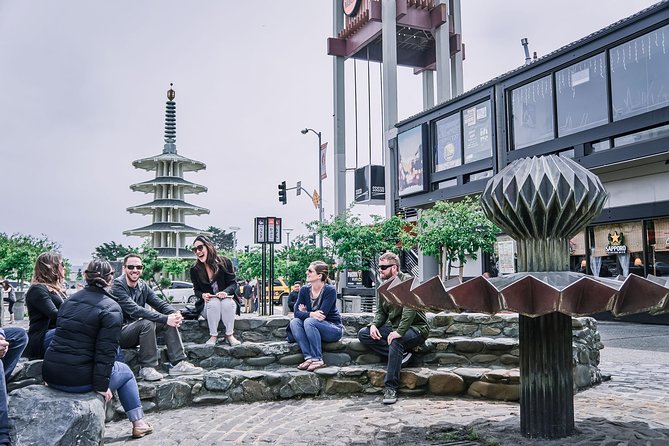
Reviewed · FOOD & DRINK
Food, History, and Resistance: A Self-Guided Audio Tour
Japantown is more than ramen and sushi. This self-guided audio walk connects food, Black jazz culture, Japanese American history, and the painful story of wartime internment, using real places along the route rather than a museum display.
I like two things right away: you get lifetime access with offline maps and audio, and the pace leaves room to stop and look around. The route also reaches stories many visitors miss, from traditional manju to the old Bop City jazz scene. The main drawback is that this is an audio tour, not a live guide, and food, transport, and attraction admissions are not included.
Key points at a glance
- Traditional sweets: Learn about Benkyodo, one of only three traditional Japanese manju makers remaining in the United States.
- Wartime memory: Hear about the places connected with Japanese American reporting and internment during World War II.
- Jazz history: Visit the former site of Bop City at 1712 Fillmore Street, where John Coltrane, Billie Holiday, Miles Davis, and Duke Ellington played.
- Flexible timing: The audio portion takes about 50 minutes to one hour, but you can pause and explore.
- Low entry price: At $11.99, the tour costs less than most guided walks, though it does not include food or admission fees.
- Small-scale format: The activity has a maximum of 10 participants, but the self-guided format lets you move at your own pace.
Why this Japantown walk is worth your time
This tour gives you a useful correction to the usual San Francisco food itinerary. Japantown is often reduced to restaurants, markets, and shopping, yet its streets carry stories about migration, racism, war, music, and survival. The audio route brings those subjects together in a compact walk.
I especially like the way food acts as an entry point. Manju is not just a snack mentioned in passing. It opens a window onto Japanese tradition and the survival of small family businesses in the United States. From there, the route moves toward harder subjects, including the forced removal and internment of Japanese Americans during World War II.
The experience also widens the neighborhood’s story beyond Japanese American history. The Fillmore district became known as the Harlem of the West in the 1940s, when San Francisco’s Black community grew greatly and the area became a major center for jazz. That makes the walk more layered than a standard neighborhood food tour.
The format suits independent visitors. You use the VoiceMap application on your own smartphone, and you can download the audio, map, and location data for offline use. That matters in a city where you may not want to depend on a steady signal while walking.
More history walks in San Francisco:
- Chinatown & North BeachLittle Italy: 7 Tastings & History
★ 5.0 · 1,070 reviews - North Beach & Little Italy Walking Tour: Food, History & Flavor
★ 5.0 · 1,044 reviews - Chinatown Walking Tour: Food, History & Flavor
★ 5.0 · 575 reviews
Starting at Osakaya Restaurant on Post Street
The walk begins at Osakaya Restaurant, 1737 Post Street, in San Francisco’s Japantown. This is a practical starting point because the tour immediately places you in the neighborhood’s food and community setting.
You should allow more than the listed 50 minutes to one hour if you want to pause for photographs, look at buildings, or buy something to eat. One of the most useful features is the ability to stop the narration and continue later, rather than being tied to the speed of a group.
The opening section makes the point that Japantown has stories that are easy to miss if you simply arrive for lunch. You may recognize the restaurants and commercial activity, but the audio asks you to look again at the people and events that shaped the area.
Because there is no live guide, pay attention to your phone’s battery before starting. The tour includes offline access, which reduces the need for mobile data, but it does not provide a phone. You are responsible for bringing the device needed to play the tour.
Benkyodo and the tradition of manju
One of the most distinctive stops concerns Benkyodo, described as one of only three traditional Japanese manju makers remaining in the United States. The other two are in Los Angeles and San Jose, the country’s other remaining Japantowns.
Manju is a Japanese confection traditionally made with sweet bean paste wrapped in mochi. The mochi is pounded rice with a sticky, soft texture. If you have only encountered Japanese sweets through modern packaged desserts, this stop gives you a more direct connection to an older food tradition.
The value here is not simply learning the name of a pastry. Small food businesses can preserve language, technique, family memory, and a sense of place. A shop such as Benkyodo helps explain why Japantown is a living community rather than a themed shopping district.
You should note that food and drinks are not included in the $11.99 price. The tour can tell you why manju matters, but any purchase is separate. That is a minor limitation, especially for visitors who expect a food tour to include tastings.
Still, this section is likely to appeal to anyone who likes to understand the story behind what they eat. It also gives the tour a tangible detail. You are not hearing only about distant events. You are learning about a specific food and a specific craft with very few remaining makers in the United States.
The Japanese Language School gate and wartime memory
The route also touches the Japanese Language School and a gate connected with the wartime reporting process for Japanese Americans. This is one of the most emotionally serious parts of the walk.
During World War II, Japanese Americans were forced to leave their homes and report for internment. The route connects that national history to a physical place in San Francisco. That connection can be powerful because you are not only hearing a date or a policy. You are standing near a location where families may have gathered under frightening circumstances.
The personal weight of this stop is clear from the way the tour can connect with family history. One account tied the site to grandparents and children who lived in San Francisco before being sent first to Tanforan horse track and then to Topaz, Utah. The route cannot identify every family who passed through, but it can make the scale of the event feel more immediate.
This is also where the self-guided format has an advantage. You can pause the narration and take a moment. A live group has to keep moving, while this tour allows you to give the subject the attention it deserves.
The audio is not a substitute for a museum, archive, or full account of internment. It is a short neighborhood walk. Still, it offers a useful starting point and encourages you to see the streets as places where real families faced life-changing decisions.
More self-guided audio walks in San Francisco:
- San Francisco: Alcatraz Ticket, Ferry, & Self-Guided App
★ 4.5 · 2,460 reviews - San Francisco: Alcatraz, Ferry & Audio Tour w/ Night Option
★ 4.4 · 617 reviews - Self-Guided Cable Car City Tour in San Francisco
★ 3.0 · 226 reviews - San Francisco: Self-Guided Bike Rental
★ 4.7 · 161 reviews
Bop City at 1712 Fillmore Street
The route then reaches the former site of Bop City at 1712 Fillmore Street. In the 1940s, this after-hours club became a major place for jazz musicians to play. Names connected with the club include John Coltrane, Billie Holiday, Miles Davis, and Duke Ellington.
That list alone gives the stop real force, but the larger story is the growth of San Francisco’s Black community and the nickname Harlem of the West. Fillmore Street was not just a place for music. It was a center of Black social and cultural life during a period when segregation and discrimination shaped where people could live, work, and gather.
This part of the tour adds a needed second community story to the Japantown route. You are not getting a narrow account of one ethnic neighborhood. You are seeing how nearby communities shaped one another, and how the Fillmore district became important to American music.
The main limitation is that Bop City is a historical site rather than a functioning jazz club on this tour. You should not expect a performance or a museum interior. The appeal comes from learning what happened at the address and imagining the importance of the site in its time.
For music fans, this may be the strongest stop. For everyone else, it provides a clear reminder that San Francisco’s cultural history extends well beyond the attractions usually found in guidebooks.
A self-guided pace that gives you room to think
The tour takes about 50 minutes to one hour if you follow the audio at its normal pace. That estimate does not include meals, shopping, photographs, or time spent pausing at the stops.
One past user found the pacing easy to follow and appreciated being able to pause and explore locations in greater detail. I think that is the right way to use this experience. Treat the stated duration as the narration time, not a strict appointment.
The VoiceMap application provides the audio, map, and geodata. Offline access is especially helpful because you can download what you need before setting out. It also makes the route less dependent on mobile reception.
There is no need to match the walking speed of other people. The booking information allows a maximum of 10 participants, but the important point is that this remains a self-guided activity. You can listen alone, with a companion, or as part of a small group using your own device.
The tradeoff is that you do not have a person beside you to answer questions. If you want conversation, spontaneous recommendations, or a guide who can adjust the route to your interests, a live tour may serve you better.
What the $11.99 price really includes
At $11.99 per person, this is an inexpensive way to add structure to a visit to Japantown. The price includes lifetime access to the Food, History and Resistance in Japantown tour, along with the VoiceMap application and offline audio, maps, and location data.
That lifetime access improves the value if you are planning a longer San Francisco stay or expect to return. You can use the tour when your schedule suits you rather than fitting into a single departure time.
The price does not cover a smartphone, transportation, food, drinks, museum tickets, or admission to other attractions along the route. If you stop for manju or a meal, plan for those costs separately.
I would judge the value by your interests. If you want a short, independent introduction to local history, $11.99 is reasonable. If your main goal is a full meal with tastings or a professionally guided historical tour, this is not that product.
The strongest value comes from the subject matter and flexibility. The tour links several stories in one route, and the lifetime access means you are paying for a reusable audio experience rather than a one-time group departure.
Who will enjoy this experience most
I would recommend this walk to independent visitors who like to connect food with history. It is also a good fit for people who prefer short activities and want to explore without committing to a half-day tour.
History-minded visitors will appreciate the wartime material, especially the connection between the neighborhood and internment. Music fans should pay close attention to the Bop City section and the names associated with 1712 Fillmore Street.
Families may find the route useful if older children can listen through an audio tour and engage with difficult historical subjects. The activity information says most people can participate, and service animals are allowed.
You may want something else if you are looking for extensive food sampling, indoor attractions, or a live guide. The tour does not include tastings, entrance tickets, or transportation, and much of its value depends on your willingness to listen and look closely at the places around you.
The route is near public transportation, which makes the start and finish practical to reach. The end point is at 1010 Geary Boulevard, San Francisco, 94109. No transportation between the start and end is included, so plan your return or onward journey separately.
Practical details before you set out
The tour is offered in English. Confirmation is provided at booking, and the activity operates every day according to the listed availability.
Download the audio and map before you begin. Bring a charged smartphone, since the phone is not supplied. Comfortable walking shoes are sensible, although the supplied information does not specify a particular distance or terrain.
Give yourself time to pause at the wartime sites. The audio lasts less than an hour, but rushing through the route would weaken the experience. The most meaningful parts involve looking at an ordinary street or gate and considering the events connected with it.
The booking is non-refundable and cannot be changed for any reason. That makes it wise to book only when you are confident you can use it, even though access itself is flexible after purchase.
Should you book Food, History, and Resistance?
Book it if you want an affordable, thoughtful walk that gives Japantown more depth than a restaurant visit alone. The combination of manju tradition, Japanese American wartime history, and Fillmore jazz makes the route unusually varied for a one-hour audio experience.
I would especially choose it for a free afternoon when you want to explore independently. At $11.99, the offline access and lifetime use add solid value, and the pause function lets you set your own pace.
Skip it if you want included food, a live guide, or entry to museums and other attractions. For everyone else, this is a focused way to pay attention to the streets, hear the stories attached to them, and leave Japantown with a fuller understanding of what you saw.
FAQ
How long does the audio tour take?
The tour takes approximately 50 minutes to one hour. You can pause along the way, so the full outing may take longer if you stop to explore or eat.
Where does the tour begin?
It begins at Osakaya Restaurant, 1737 Post Street, San Francisco, California 94115.
Where does the tour end?
The tour ends at 1010 Geary Boulevard, San Francisco, California 94109.
What language is the tour offered in?
The tour is offered in English.
What is included in the price?
The $11.99 price includes lifetime access to the Food, History and Resistance in Japantown tour, the VoiceMap application, and offline access to the audio, maps, and geodata.
Do I need to bring a smartphone?
Yes. A smartphone is not included, so you need your own device to use the VoiceMap application.
Are food and attraction tickets included?
No. Food, drinks, transportation, museum tickets, and entrance fees for other attractions along the route are not included.
Can I cancel or change the booking?
No. The experience is non-refundable and cannot be changed for any reason.
More tours you can do at your own pace in San Francisco
- Official Alcatraz Island Prison Tour with Free App Audio Packages
★ 4.5 · 337 reviews - Alcatraz Inside Access Ferry and Audio Tour with Night Option
★ 4.0 · 138 reviews - San Francisco: Self-Guided Electric Bike Rental
★ 4.9 · 82 reviews - Golden Gate Bridge to Sausalito Self-Guided Bike Tour
★ 4.0 · 59 reviews
More places to eat your way around San Francisco
- San Francisco Authentic Food Tour with 5 Locals Favorites Dishes
★ 5.0 · 852 reviews - San Francisco: North Beach and Little Italy Food Tour
★ 4.8 · 188 reviews - Ultimate Electric SF Bike Tour- food, icons & local hidden gems
★ 5.0 · 182 reviews - Mission District Food Tour: Appetizers, Entrée and Dessert
★ 5.0 · 182 reviews
Newest San Francisco write-ups
- Yosemite Valley: 3-Day Lodging Adventure★ 4.9 · 9 reviews
- From San Francisco: Yosemite & Tahoe Sierras 4-Day Trip★ 5.0 · 4 reviews
- San Francisco: Turkish Mosaic Lamp Workshop★ 4.2 · 12 reviews
- From San Francisco: Yosemite Private Full-Day Trip★ 5.0 · 13 reviews
- San Francisco Airport 1-Way Transfer to/from the City★ 4.8 · 36 reviews
- Hop-On Hop-Off Deluxe Bus Tour of San Francisco: 2 Days, 20 Stops★ 3.5 · 12 reviews
- Redwoods of Marin and Mt. Tamalpais Walking Tour with Local Guide★ 5.0 · 9 reviews
- Yosemite and Tahoe from San Francisco: 4 Day Sierra Nevada Tour★ 5.0 · 13 reviews
Food & Drink, compared.
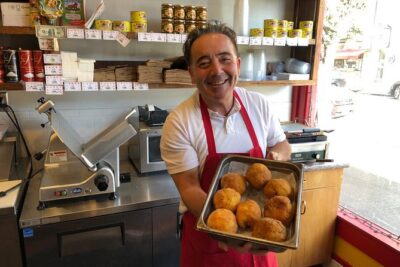
North Beach & Little Italy Walking Tour: Food, History & Flavor
Read our review →
San Francisco Authentic Food Tour with 5 Locals Favorites Dishes
Read our review →

Mission District Food Tour: Appetizers, Entrée and Dessert
Read our review →
Ultimate Electric SF Bike Tour- food, icons & local hidden gems
Read our review →
Exclusive North Beach Food Tour in San Francisco
Read our review →
SF’s Chinatown: Tea & Dim Sum Food Tour – Includes full meal, 3hr
Read our review →Browse the lists this tour appears in