Reviewed · TOURS
San Francisco: Downtown Architecture & Public Art Tour
San Francisco’s downtown tells its story in stone, steel, glass, and public art. This three-hour walk moves from the rubble-era London Paris National Bank to art deco towers, mid-century glass, and newer buildings by architects such as Cesar Pelli and Rem Koolhaas. Jamie’s tour connects architecture to the city’s past, so you are not just staring upward at office blocks.
I like the way the tour brings you into public spaces you could easily miss on your own, including a remarkable rooftop park built above a transit terminal. I also like the variety: kinetic sculpture, digital art, paintings, gardens, fountains, and buildings from several generations all fit into one walk.
The main consideration is the amount of walking. It is described as moderate rather than strenuous, but you will spend about two and a half hours on city streets, so comfortable shoes and weather-ready clothing matter.
Key points at a glance
- Start at Mechanics Monument Plaza: Meet at 488 Market Street, in front of a landmark tied to San Francisco’s working past.
- Follow six eras of downtown growth: See post-1906 reconstruction, art deco, International Style, and newer towers in one connected story.
- Treat the CBD as an open-air art gallery: Look for work by George Rickey, Jenny Holzer, Frank Stella, Jonathan Borofsky, and Ugo Rondinone.
- Visit the Salesforce Transit Center park: Walk through 5.5 acres of gardens, trees, and public space built above transportation infrastructure.
- Finish at SFMOMA: End beside one of the city’s major modern art museums, whose exterior is worth a look before you go inside.
- Expect a conversation, not a lecture: Jamie is praised for an easygoing, engaging approach and for answering questions throughout the walk.
A downtown tour that reads San Francisco from the street
I think this is a smart choice if you want to understand San Francisco beyond its famous hills, cable cars, and Victorian houses. The focus here is the Central Business District, where the city’s growth appears in layers.
You will see buildings shaped by earthquakes, economic booms, changing architectural ideas, and the arrival of major technology companies. The guide helps you compare those layers rather than treating each building as an isolated object.
That approach gives the walk a useful rhythm. One stop may explain a bank built after the 1906 earthquake and fire. The next may show how art deco confidence changed the skyline in the 1920s. Later, glass towers and newer public spaces reveal how downtown moved south and adapted to a denser city.
Jamie’s strength, based on the supplied information, is making this a conversation. You can ask about an architect, a building’s purpose, or San Francisco’s place in wider American and international architecture. Several comments describe the tour as relaxed, personable, and easy to follow, which matters during a three-hour walk.
Other ways to spend a day in San Francisco:
- Muir Woods and Sausalito (Return by Bus or Ferry)
★ 4.5 · 5,098 reviews - Big Bus SF: Hop-on Hop-off Tour with 17 Stops and Sunset Option
★ 4.0 · 4,539 reviews - Napa and Sonoma Wine Country Full-Day Tour from San Francisco
★ 4.5 · 4,455 reviews
Starting at Mechanics Monument Plaza
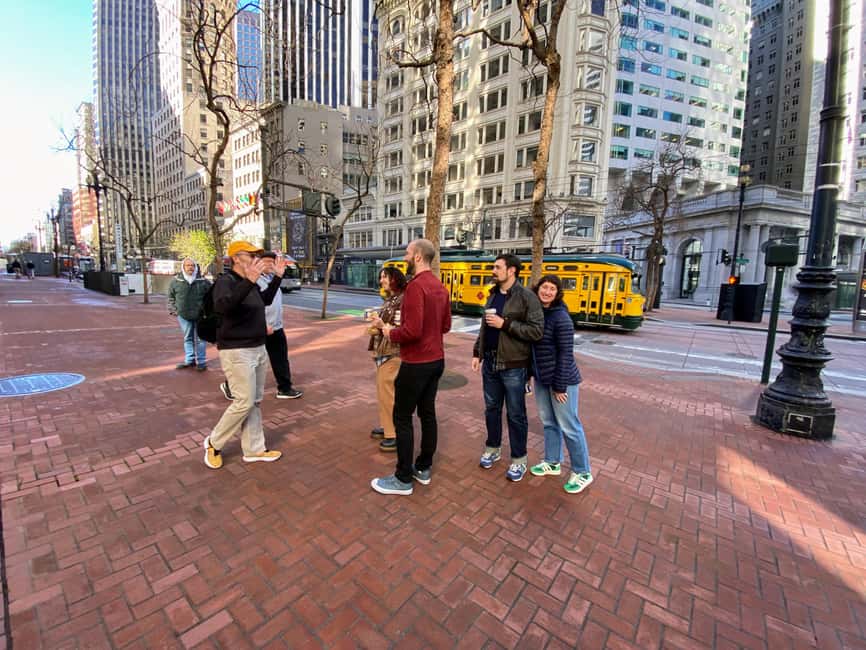
The meeting point is in front of Mechanics Monument Plaza at 488 Market Street. This puts you right in the Financial District, among streets where office workers, old commercial buildings, and newer towers meet.
The plaza itself gives the tour a fitting opening. The Mechanics Monument honors the city’s working trades, so it provides a link between San Francisco’s practical building culture and the polished architecture you will see later.
From here, you begin a guided walk through the downtown core. The route covers about two and a half hours on foot, with the full activity lasting three hours. The extra time includes the start and finish around SFMOMA.
I would arrive ready to walk rather than treating this as a quick sightseeing loop. The tour is wheelchair accessible, but the city setting still means you should dress for the weather and wear shoes that can handle extended time on pavement.
From earthquake reconstruction to art deco confidence
One of the most useful parts of the tour is the way it begins with the city’s rebuilding after 1906. The London Paris National Bank is presented as an example of the grand commercial architecture that rose from the earthquake and fire.
That context matters. San Francisco’s downtown was not simply planned in one sweep. It was repeatedly rebuilt, expanded, and revised. When you look at an older bank or office block, you are also looking at a statement about confidence after disaster.
The Pacific Telephone Building offers a different mood. Its art deco design arrived during the 1920s, when bold decoration and a strong vertical profile helped buildings announce themselves on the skyline.
I like this side-by-side method because it gives you something to look for. You can compare the solid, grand character of an earlier financial building with the stylized lines and decorative energy of the roaring twenties. A guide who points out such details can turn a routine walk past office buildings into a lesson in city design.
Glass towers and the International Style
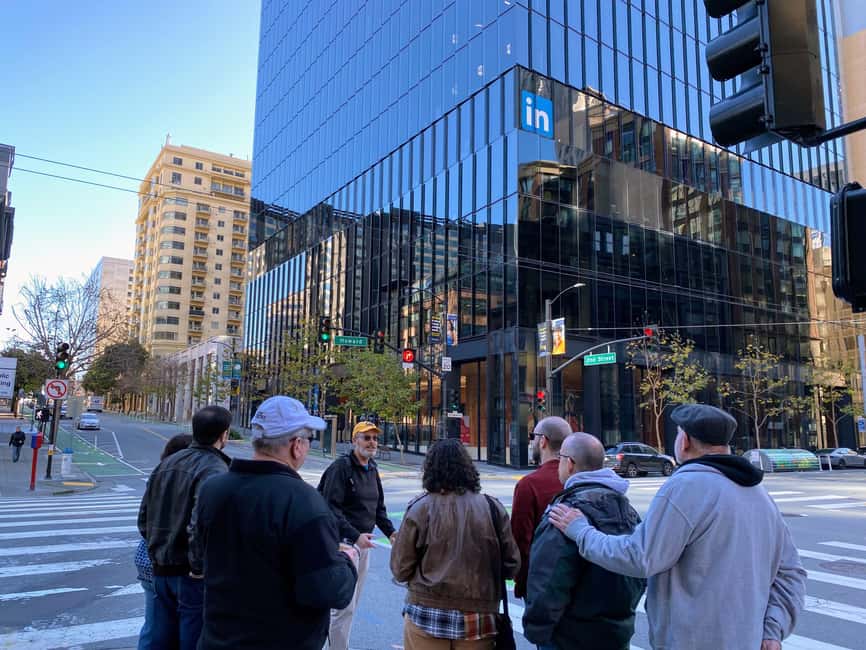
The Crown Zellerbach Building represents the mid-century economic boom and the International Style. Its sleek glass and modern form mark a major shift from the ornament and masonry of earlier downtown architecture.
This is a good point in the walk to consider what modernism tried to achieve. The emphasis moved toward clean lines, new materials, efficiency, and a more universal look. The building also shows how San Francisco participated in broader architectural changes taking place across the United States and beyond.
You do not need a background in architecture to enjoy this section. Jamie’s job is to help you notice how a building meets the street, how it shapes the skyline, and how its design reflects the period when it was built.
That is one reason I would recommend this tour to curious first-time visitors and local residents alike. Downtown changes quickly, and even people familiar with the Bay Area may not have looked closely at the newer buildings or the spaces between them.
A different sort of San Francisco day, for when the fog rolls in:
- Small Group Yosemite and Giant Sequoias Day Trip from San Francisco
★ 5.0 · 3,671 reviews - San Francisco: Golden Gate Bay Cruise
★ 4.7 · 3,644 reviews - San Francisco: Hop-On Hop-Off Sightseeing Tour with 17 Stops
★ 4.5 · 3,600 reviews - Yosemite Highlights & Giant Sequoias Day Tour from San Francisco
★ 4.5 · 3,455 reviews
The southward push and the star architects
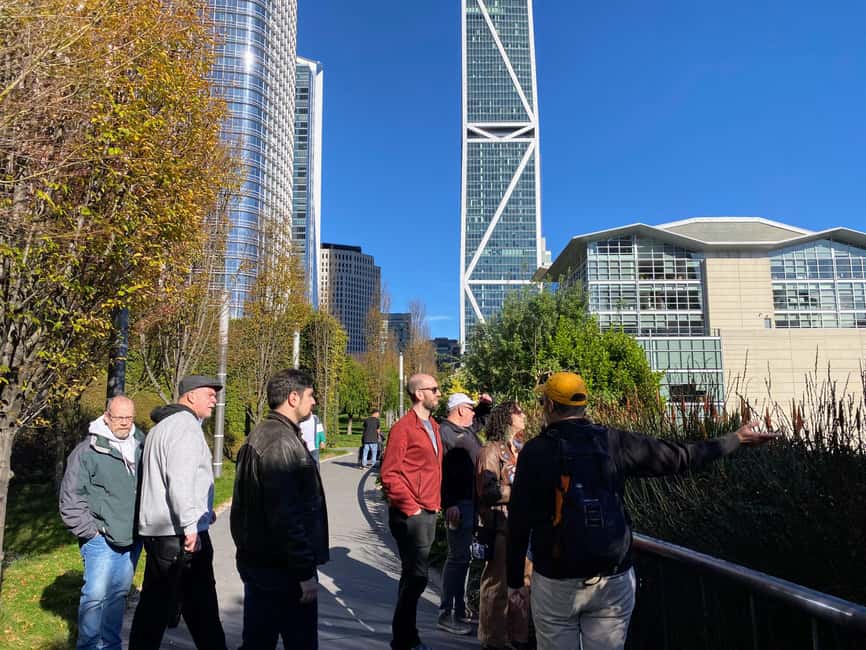
The tour then moves into the era when the Central Business District expanded southward. The JP Morgan Chase Building is used as an example of this turn-of-the-millennium growth.
You will also see newer work by well-known architects, including Cesar Pelli and Rem Koolhaas. These buildings bring a more global architectural language to San Francisco, with forms and ideas that connect the city to major business centers around the world.
The value here is comparison. A tower by a famous architect can be impressive, but knowing why it was built, where it fits in the city, and how it relates to earlier structures makes it more meaningful.
I would not book this expecting an interiors tour. The focus is on exterior architecture, street-level observation, public spaces, and the stories tied to them. If you want a close look at lobby finishes or private office interiors, this is not that kind of experience.
Downtown as an open-air art gallery
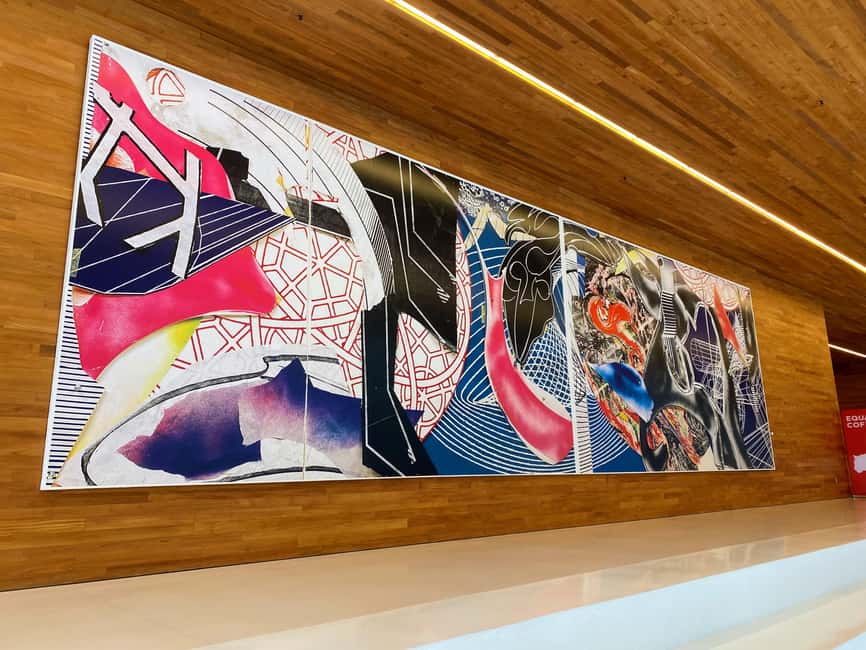
San Francisco’s office development rules have produced an unusual collection of public art. For 40 years, new downtown office buildings have dedicated 1 percent of their construction budgets to public art.
That policy helps explain why the walk includes so much art along ordinary streets and in office plazas. Instead of visiting one gallery, you move through a series of outdoor settings where sculpture, digital work, paintings, and installations share space with daily city life.
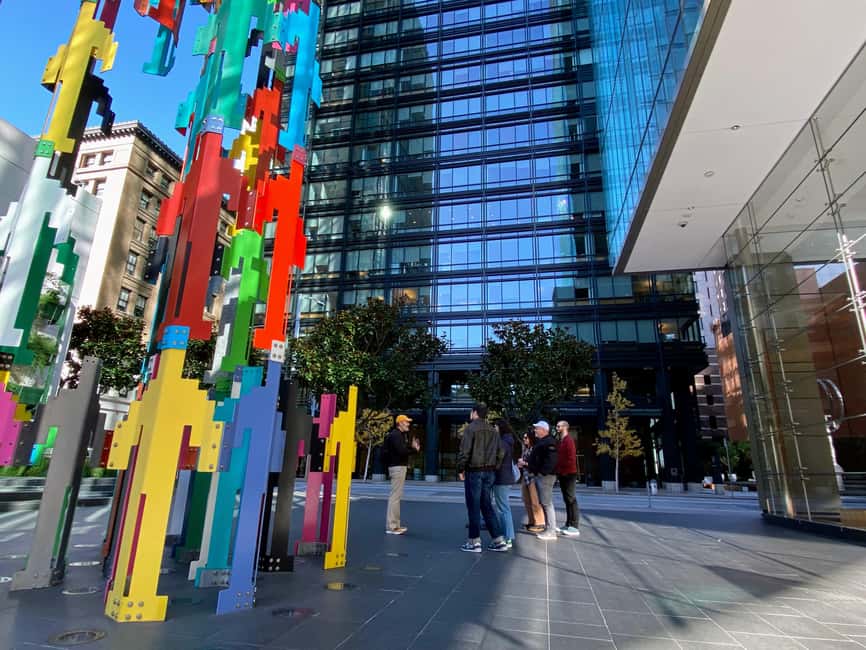
The artists named for the tour include George Rickey, Jenny Holzer, Frank Stella, Jonathan Borofsky, and Ugo Rondinone. Their work covers very different approaches. You may encounter kinetic sculpture, digital art, large paintings, and playful or unexpected installations.
I especially like this part for people who think they are not art museum regulars. You do not need to spend an entire afternoon indoors or know the right vocabulary. The guide gives you a reason to pause, look, and ask what a piece is doing in its setting.
Public art also changes how you read the buildings around it. A sculpture can soften a hard plaza, interrupt a long wall, or give office workers a place to stop. The work is not just decoration added after construction. It helps shape how downtown feels at street level.
The Salesforce Transit Center park
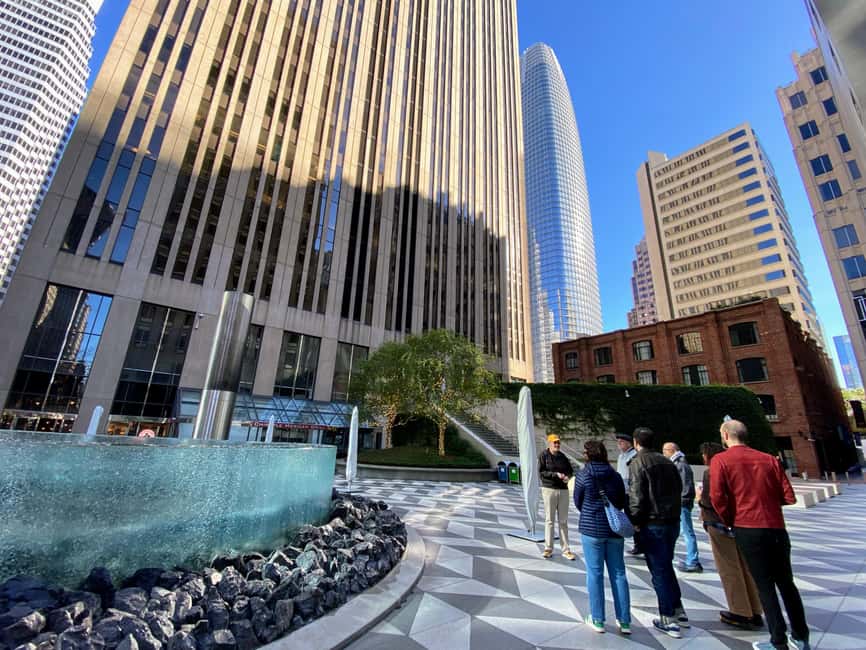
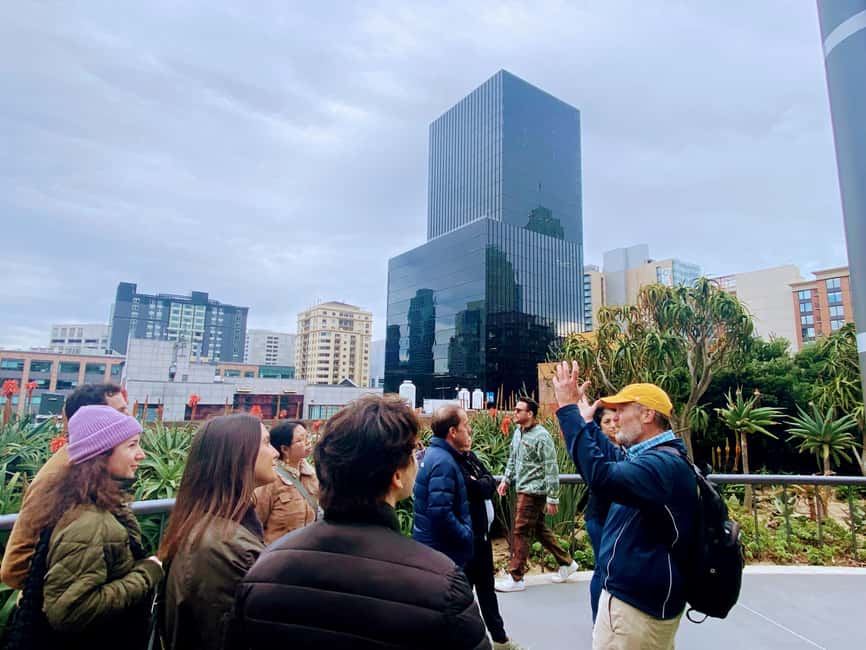
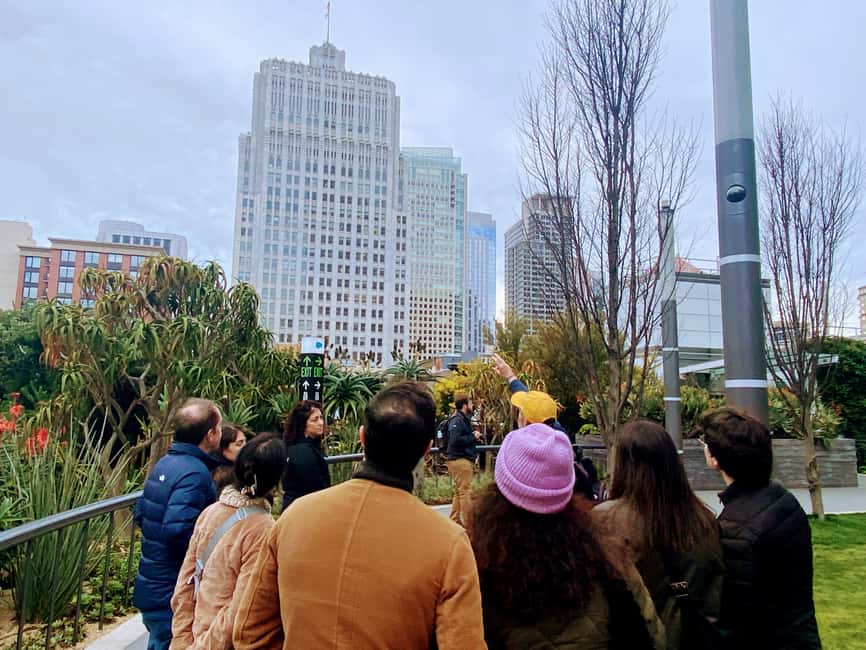
The major highlight is the Salesforce Transit Center and its rooftop park. The park stretches across four and a half city blocks and covers 5.5 acres, all built above an intermodal transit terminal.
That is an impressive bit of city engineering. The park sits about 70 feet above street level, creating open space in an area where land was scarce. It is also longer than Salesforce Tower is tall, a comparison that gives you a sense of its unusual scale.
The gardens contain 600 trees and 16,000 plants arranged in zones representing 13 ecosystems from around the world. You can expect greenery, seating, and views of the office and residential buildings built around the transit center.
The park is not only a place to pass through. Its facilities include quiet areas for reading, yoga classes, movie nights, concerts, and a beer garden. A fountain adds another clever touch: jets of water respond as buses move through the terminal below.
I consider this stop especially valuable because it shows how a dense city can create public space without clearing a new parcel of land. You see transportation, architecture, planting, art, and recreation working in the same place.
There is a practical point to remember. The park is a highlight within a walking tour, not a long free period for you to explore at your own speed. If you want an extended visit, plan to return later.
Ending at SFMOMA
The walk finishes at the entrance of the San Francisco Museum of Modern Art. SFMOMA is one of the world’s largest museums devoted to modern and contemporary art, and its exterior is part of the visual experience.
Ending here makes sense. The tour has already introduced you to public art outside traditional museum walls. SFMOMA gives you the option of continuing that subject indoors after the guided walk.
Admission to the museum is not included, so treat the finish as a convenient handoff rather than part of a museum visit. You can stop for a look at the building, continue sightseeing, or buy a separate museum ticket if you want more art.
The ending also makes the tour easy to combine with the rest of a downtown day. You begin near Market Street and finish near SFMOMA, with the Financial District and newer south-of-Market development connecting the two.
What the $44 price gets you
At $44 per person, this is not the cheapest way to walk around downtown, but the price is reasonable if you want more than a route and a list of buildings. You are paying for a live English-speaking guide who organizes a broad subject into a usable story.
The value depends on your interest. If you already enjoy architecture, public art, and city planning, the tour gives you access to details you might miss alone. If you mainly want landmark photos, you may find the pace and explanation more than you need.
The tour’s 4.9 rating from 17 reviews also reflects a clear pattern: the strongest praise goes to Jamie’s preparation, warmth, and ability to make the walk feel like a discussion. Specific comments highlight his explanations of architects, artists, companies, public spaces, and San Francisco’s past and present.
That does not mean every minute will suit every person. A three-hour architecture walk requires attention and steady movement. Still, the mixture of buildings, art, gardens, and history keeps it from feeling like three hours of looking at similar towers.
Who should book this walk
I would choose this tour if you want to:
- Understand how downtown developed after the 1906 earthquake and through later building booms
- See public art by recognized artists without spending the whole day in museums
- Learn about architects such as Cesar Pelli and Rem Koolhaas
- Visit the Salesforce Transit Center park with context about its design and plantings
- Ask questions in a relaxed, personal setting
- Add a structured morning or afternoon activity to a San Francisco visit
I would think twice if you dislike city walking, prefer indoor attractions, or want a tour centered on neighborhoods such as Chinatown, North Beach, or the Mission. This experience stays in the downtown business district and focuses on architecture, public art, and public space.
The route is wheelchair accessible, and the walking is described as moderate. Even so, check the forecast and dress appropriately. San Francisco weather can shift, and comfort will make a real difference during a long outdoor visit.
Should you book it?
Book this tour if you want to see downtown with sharper eyes. The best reason to go is not simply the list of architects or artworks. It is the connection between them: disaster and rebuilding, business and design, transportation and public space, private development and art offered to everyone.
Jamie’s conversational style appears to be a major part of the experience. You get a guide who can connect local buildings to American and international architecture while leaving room for questions.
At $44, I see good value for anyone who enjoys cities and wants a more thoughtful introduction to San Francisco’s modern side. Wear good shoes, allow three hours, and arrive ready to look up, down, and across the street.
FAQ
Where does the San Francisco architecture tour begin?
The tour begins in front of Mechanics Monument Plaza at 488 Market Street.
Where does the tour finish?
The walk finishes at the entrance of the San Francisco Museum of Modern Art, also known as SFMOMA.
How long does the activity last?
The full activity lasts three hours, including a guided walking tour of about two and a half hours through downtown San Francisco.
What language is the tour conducted in?
The tour is conducted in English with a live English-speaking guide.
Is the tour wheelchair accessible?
Yes, the activity is listed as wheelchair accessible.
What should I bring or wear?
Wear comfortable walking shoes, check the weather forecast, dress appropriately, and be prepared for a moderate amount of walking.
Newest San Francisco write-ups
- Fisherman’s Wharf & Pier 39 Food Tour – Includes Full Meal, 3 hrs★ 5.0 · 9 reviews
- Filoli House & Garden★ 5.0 · 20 reviews
- San Francisco Four Peaks Tour★ 4.0 · 4 reviews
- Express San Francisco Layover Tour w Airport Pickup and Dropoff★ 5.0 · 6 reviews
- Napa Valley Wine and Food Tasting Tour from San Francisco★ 5.0 · 7 reviews
- Experience the Thrills of Yosemite: 3-Day Package★ 5.0 · 3 reviews
- Early Bird: Electric Scooter Rental to Golden Gate Bridge★ 5.0 · 6 reviews
- San Francisco Gregangelo Museum – Immersive Kids’ Tour★ 5.0 · 5 reviews
Tours, compared.
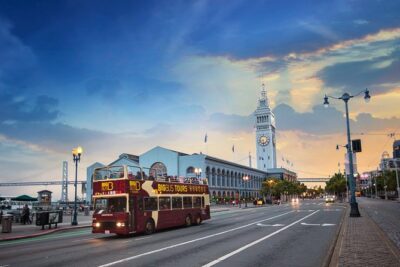
Big Bus SF: Hop-on Hop-off Tour with 17 Stops and Sunset Option
Read our review →
Napa and Sonoma Wine Country Full-Day Tour from San Francisco
Read our review →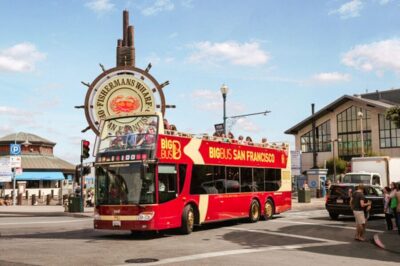
Hop-On Hop-Off Sightseeing Tour with 17 Stops
Read our review →
Yosemite Highlights & Giant Sequoias Day Tour from San Francisco
Read our review →
Combo Tour: Alcatraz Island and San Francisco Grand City Tour
Read our review →
Monterey, Carmel and 17-Mile Drive: Full Day Tour from SF
Read our review →