

Reviewed · SAN FRANCISCO
SKIP THE LINE: Exploratorium Daytime Admission
The Exploratorium turns science into something you can touch, test, and sometimes make a little silly. At Pier 15, you can move from mirrors and bubbles to perception, biology, mechanical devices, and Bay Area forces without following a guide or fixed route. This is a self-guided museum visit, so you set the pace.
I like the all-day admission and the freedom to return to an exhibit that grabbed your attention. I also like the location, right on the Embarcadero between the Ferry Building and Fisherman’s Wharf, with broad views of the Bay and Bay Bridge from the Bay Observatory. The main caution is crowding. Popular exhibits can become a free-for-all, especially when school-age children arrive.
- Skip the ticket counter: Use your mobile admission to proceed toward the museum entrance instead of buying or exchanging a ticket at the counter.
- Six areas to explore: Expect galleries covering perception, light, biology, mechanical ideas, and the forces shaping the Bay Area.
- Hands-on from start to finish: Children and adults can touch, test, build, watch, and experiment.
- Plan at least three hours: Many families stay much longer, and a full day is realistic if you want to try most exhibits.
- Pier 15 location: Combine the museum with a walk along the Embarcadero, the Ferry Building, or Fisherman’s Wharf.
- Tactile Dome costs extra: This popular sensory experience is not included in daytime admission.
Why the Exploratorium Works for More Than Children
The Exploratorium is not a museum where you quietly read labels while keeping your hands behind your back. Its central idea is active learning. You turn a handle, stand in front of a mirror, watch light change, test a mechanical setup, or notice how your own senses can be fooled.
That makes it a good choice for mixed-age groups. A four-year-old may enjoy the immediate thrill of pushing and pulling, while a teenager or adult can spend time thinking about the physics or biology behind the display. One exhibit may hold a child’s attention for ten seconds and another for twenty minutes. That freedom is part of the fun.
The museum also works well for adults traveling without children. Couples can explore together, compare what they see, and take turns trying the more physical displays. Older adults have access to frequent benches, which makes a longer visit easier.
Still, this is not a quiet science center. Children are encouraged to use the exhibits, and popular stations may require patience. If you dislike crowded rooms or waiting for a turn, choose a quieter time if possible and keep your expectations flexible.
Arriving at Pier 15 on the Embarcadero
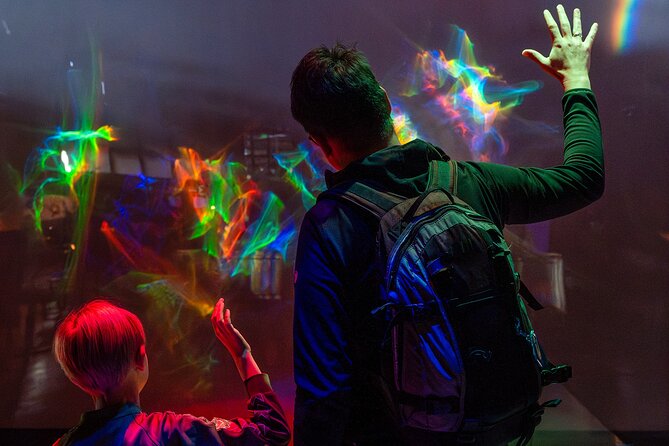
The Exploratorium sits at Pier 15, a useful location for a day in central San Francisco. It is between the Ferry Building and Fisherman’s Wharf, so you can pair your visit with waterfront walking rather than treating it as an isolated stop.
Your mobile ticket is designed to reduce time at the ticket counter. This is an important detail: skip-the-line access here means bypassing the ticket-purchase or voucher-exchange step. It does not mean that every exhibit inside will be empty or that you receive priority at individual activities.
That distinction matters. On a quiet day, there may be little or no line to avoid, so the practical value of the ticket is convenience rather than a dramatic time savings. On a busy day, being able to move directly toward the entry checkpoint is more useful.
The ticketing process has not always been equally smooth. Some visitors have had to sort out barcode or printed-ticket problems at the counter. The museum has been moving toward barcodes that can be scanned at entry, but you should keep your mobile ticket ready and allow a few extra minutes in case staff need to verify it.
More tickets that skip the queue in San Francisco:
- San Francisco: Skip-the-Line 1-Hour Bay Cruise by Boat
★ 4.6 · 1,483 reviews - San Francisco: Skip-the-Line Escape from The Rock Bay Cruise
★ 4.4 · 1,393 reviews - SKIP THE LINE: Exploratorium After Dark Thursdays (18+) Admission
★ 4.5 · 51 reviews
Six Galleries of Hands-On Science
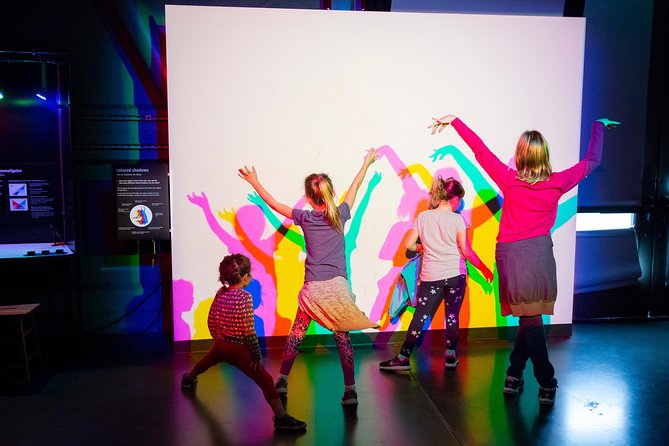
The museum spreads its displays across six spacious galleries, including an open-air gallery. You will not be handed a required route. Instead, you can wander, stop often, and return to areas that interest your group.
Gallery 1: The Brain, Senses, and Perception
Gallery 1 focuses on how you experience the world. Expect displays that ask you to question what your eyes, ears, and brain are telling you. This section can be especially rewarding with children because it turns a difficult subject into a personal test.
A child does not need a science lesson first. The exhibit gives you something to try, then creates a natural opening for a conversation about perception. Adults often find these displays just as engaging because they reveal how easily the brain fills gaps and makes quick judgments.
If your group includes a child who wants to understand how things work, start here. It provides a useful foundation for the rest of the museum.
Gallery 3: Light, Mirrors, and Bubbles
Gallery 3 is made for quick experiments and visual surprises. You will work with light, mirrors, and bubbles, with displays that are easy to understand through action rather than long explanations.
This is often a strong first stop for younger children. It offers immediate results and gives everyone a chance to get comfortable with the museum’s hands-on approach. It is also a good place to slow down and let children repeat an experiment instead of rushing from one display to the next.
The drawback is that visual exhibits attract crowds quickly. You may need to wait for a clear spot, and children may need reminders to take turns.
A different sort of San Francisco day, for when the fog rolls in:
- Muir Woods and Sausalito (Return by Bus or Ferry)
★ 4.5 · 5,098 reviews - Big Bus SF: Hop-on Hop-off Tour with 17 Stops and Sunset Option
★ 4.0 · 4,539 reviews - Napa and Sonoma Wine Country Full-Day Tour from San Francisco
★ 4.5 · 4,455 reviews - Small Group Yosemite and Giant Sequoias Day Trip from San Francisco
★ 5.0 · 3,671 reviews
The Tinkering Studio
The Tinkering Studio focuses on mechanical contraptions and making things work. It is one of the areas where you should allow extra time, since the appeal is not simply looking at an object. You test an idea, adjust it, and see what happens.
This section is particularly good for children who like building, taking things apart, or solving problems with their hands. It also gives adults a chance to join in without feeling they are only supervising.
The experience is self-guided. You are not following a scheduled workshop or a named instructor, so the amount of support depends on the activity and the staff available at the time. The museum does have demonstration stations, and staff there have been praised for helping children engage with the displays.
Gallery 4: From DNA to Ecosystems
Gallery 4 moves into biology, from DNA and cells to organisms and ecosystems. It gives you a chance to connect small-scale life science with larger living systems.
This area suits families with older children, teenagers, and adults who want more than bright lights and quick tricks. Younger children can still find things to do, but they may need you to explain the larger ideas in simple terms.
Do not worry about seeing every label or activity in order. The museum is large, and the best approach is to choose a few displays that hold your group’s attention rather than forcing everyone through every station.
The Open-Air Gallery
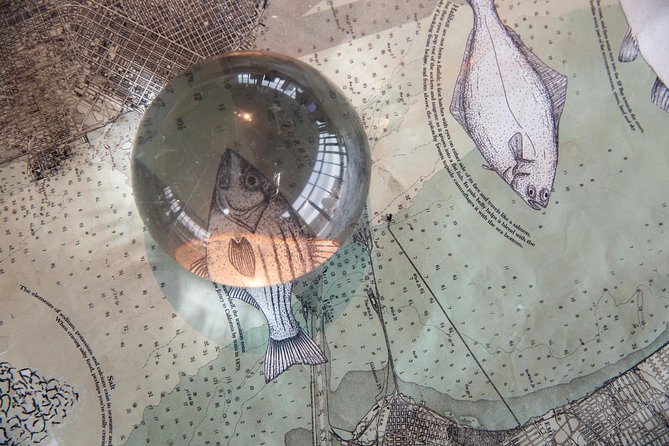
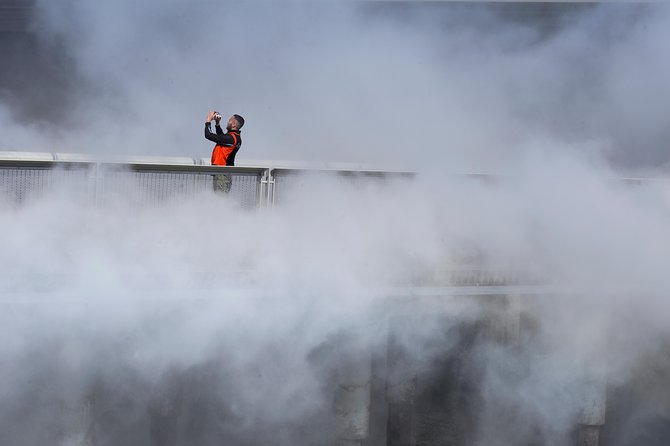
The outdoor space examines the natural and human forces that shape the San Francisco Bay Area. It gives you a break from the indoor galleries while keeping the focus on science and the local setting.
This is a useful pause for families. After time in crowded indoor rooms, stepping outside can help children reset. It also connects the museum to the waterfront you can see beyond the building.
The open-air area is not simply a play space. It asks you to notice how natural processes and human activity affect the Bay Area. You can take the ideas from the displays and look for evidence of them along the Embarcadero afterward.
The Bay Observatory
The Bay Observatory adds a strong visual finish. From here, you get wide views toward the Bay and Bay Bridge, with ships and waterfront activity below.
It is easy to rush past this section while chasing the next exhibit, but I would save time for it. The view changes the way you understand the museum’s local focus. You have spent hours looking at scientific ideas in small displays, then you look outward at the actual Bay Area.
The observatory is also a good place for adults who need a slower moment. Families can use it as a meeting point if the group has spread out.
How Much Time Should You Allow?
The stated visit length is about three to five hours, but your timing depends heavily on the ages and interests in your group. Three hours is enough for a solid first visit if you select areas carefully. It may not be enough if your children want to repeat activities or if you stop at every station.
Several families have found that they could easily spend a full day inside. One practical approach is to allow at least 30 to 45 minutes per major section, then add time for the exhibits that capture your attention.
The all-day ticket gives you room to slow down. Some visitors leave for food and return with a hand stamp, which can make a long visit easier. Confirm the current reentry procedure at the museum before leaving, since practical rules can change.
Do not make a tight afternoon schedule after your admission. If you have a two-hour parking limit, you may feel rushed. The museum is extensive, and children often do not want to leave when adults think the visit is finished.
Food, Lockers, and Practical Comfort
Food and drinks are not included. Food inside can feel expensive, so budget for that or plan to eat elsewhere. Since the museum sits on the Embarcadero, you have other dining choices nearby, but build in time if you leave the area.
Coin-operated lockers are located just past Ticketing and the Information desk. They are useful if you are carrying jackets, bags, or items you do not want to manage at each exhibit.
Maps are available at no charge in English, Spanish, French, Italian, Traditional Chinese, Simplified Chinese, German, Portuguese, Arabic, Japanese, Korean, and Filipino. A map helps you make a plan, especially if your group includes children who want to choose the next stop.
Tactile maps for blind and visually impaired visitors are available upon request. Service animals and certified assistance animals are welcome. Most people can take part, although some displays may involve standing, reaching, or moving around crowded rooms.
Understanding the $39.95 Price
At $39.95 per person, this is not a quick attraction to squeeze into a spare hour. The price makes more sense when you treat the ticket as a half-day or full-day admission to a large museum with hundreds of displays.
The value is strongest for families who will stay several hours and use the hands-on exhibits repeatedly. It is also reasonable for adults who enjoy science, design, perception, and mechanical ideas rather than wanting a conventional museum visit.
The skip-the-line feature should not be the main reason you buy. It saves you from stopping at the ticket counter, but it does not eliminate crowds inside. If you arrive when the counter has no line, the time savings may be small.
Free admission for children age three and under improves the value for families with toddlers. The ticket cannot be applied to an annual museum membership, so frequent local visitors should compare the day ticket with membership options before purchasing.
The experience has a 4.7 rating, with 91 percent of purchasers recommending it. That matches the main strength of the visit: the museum offers enough variety to keep both children and adults occupied. The chief complaints focus on crowding and occasional ticketing confusion, not on a lack of things to do.
The Tactile Dome Is Separate
The Tactile Dome is not included in this daytime admission. It requires a separate ticket, and you should not assume you can add it automatically at the entrance.
The separate experience is worth knowing about because it may be the part a child remembers most, but it changes the cost and planning of the day. If it interests your group, check its availability and pricing separately before you arrive.
The included admission already provides plenty to do. You do not need the Tactile Dome to fill three to five hours.
Who Will Enjoy This Most?
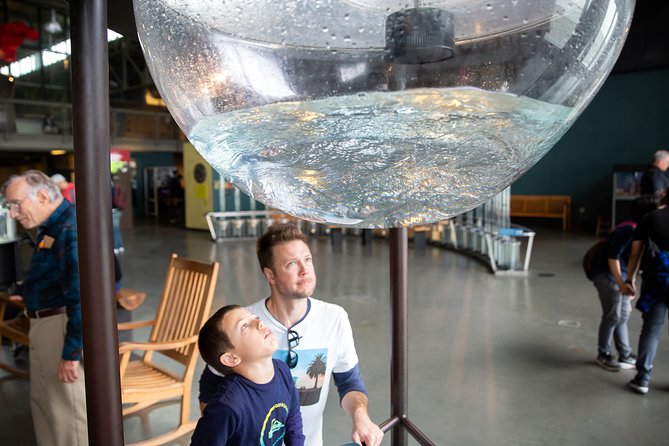
I would choose this museum for families with children who like to touch, build, test, and move around. It also works well for grandparents and grandchildren because adults can participate without needing a technical background.
It is a good rainy-day option, and it suits mixed-age groups better than many single-theme attractions. A seven-year-old may race from one exhibit to the next, while an adult spends time with biology or perception. The museum lets both styles work in the same visit.
Teenagers can enjoy it too, especially if they are given room to explore independently. Adults traveling as a couple can have a good time, but you should enjoy interactive displays rather than expect a quiet gallery experience.
I would think twice if your schedule allows only one hour, if your group becomes frustrated by waiting for popular exhibits, or if you are buying solely to skip an entrance line. The museum’s value comes from the time spent inside.
Booking, Cancellation, and the Best Plan for Your Day
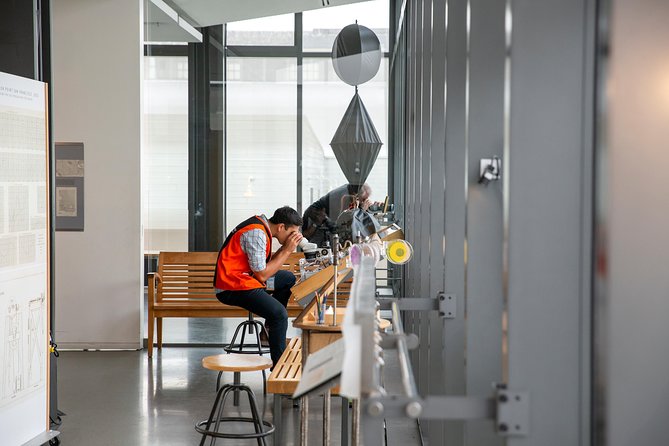
Confirmation is provided at booking, and the mobile format makes the ticket easy to carry. Because the visit is self-guided, you do not need to coordinate with a tour guide or join a fixed group. The activity has a maximum of 15 participants, though the museum itself can feel much busier inside.
Free cancellation is available if you cancel at least 24 hours before the local start time. Cancellations within 24 hours are not refunded, and late changes are not accepted.
For the smoothest visit, keep your barcode accessible, arrive with plenty of time, and plan the museum as the main event rather than a short stop between other attractions. Start with an area your children are eager to see, then use the map to reduce unnecessary walking. One useful route is to work through one wing before crossing to the other, which can help conserve energy.
Should You Book the Exploratorium?
Book it if you want a flexible, hands-on San Francisco attraction that can occupy an entire family for several hours. The mix of perception, light, mechanics, biology, outdoor science, and Bay views gives you more variety than a simple children’s museum.
The ticket is a good buy when you will stay long enough to use it fully. It is less compelling if you have limited time or are expecting priority access to the exhibits themselves. Go in knowing that the skip-the-line benefit applies to entry procedures, not crowd control inside.
For families, curious adults, grandparents with grandchildren, and anyone needing a strong rainy-day plan, I would book the daytime admission. Arrive prepared for noise and crowds, give yourself more time than you think you need, and save a few minutes for the Bay Observatory.
FAQ
Where is the Exploratorium located?
The Exploratorium is at Pier 15 on San Francisco’s Embarcadero, between the Ferry Building and Fisherman’s Wharf or Pier 39.
How long should I plan to stay?
The approximate visit length is three to five hours. You may need longer if you want to explore most of the hundreds of exhibits.
Does the ticket include the Tactile Dome?
No. The Tactile Dome requires a separate ticket and is not included with daytime admission.
What does skip-the-line admission mean here?
It allows you to bypass the ticket counter and proceed toward the museum entry point. It does not provide priority access to exhibits inside.
Are children three and under charged admission?
No. Children ages three and under receive free admission.
Are food and drinks included?
No. Food and drinks are not included in the admission price.
Can I cancel for a refund?
Yes. You can receive a full refund if you cancel at least 24 hours before the experience start time. Cancellations within 24 hours are not refundable.
Newest San Francisco write-ups
- Filoli House & Garden★ 5.0 · 20 reviews
- Fisherman’s Wharf & Pier 39 Food Tour – Includes Full Meal, 3 hrs★ 5.0 · 9 reviews
- San Francisco Four Peaks Tour★ 4.0 · 4 reviews
- Express San Francisco Layover Tour w Airport Pickup and Dropoff★ 5.0 · 6 reviews
- Napa Valley Wine and Food Tasting Tour from San Francisco★ 5.0 · 7 reviews
- Experience the Thrills of Yosemite: 3-Day Package★ 5.0 · 3 reviews
- Early Bird: Electric Scooter Rental to Golden Gate Bridge★ 5.0 · 6 reviews
- San Francisco Gregangelo Museum – Immersive Kids’ Tour★ 5.0 · 5 reviews