
Reviewed · SAN FRANCISCO
Beginner Surfing in San Francisco at Pacifica Beach
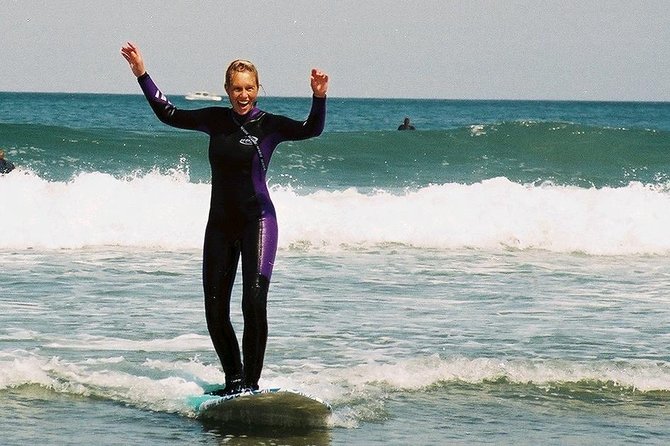
Pacifica Beach is a smart place to try surfing for the first time. This beginner clinic begins on the sand with ocean safety, wave reading, paddling, and the pop-up, then moves into shallow whitewater where you can work on catching small waves without being thrown straight into the hardest part of the sport. All equipment is included, so you do not need to arrive with a board or wetsuit.
I like the small maximum group of eight, which gives the instructor room to help each person. I also like the serious safety base: instructors are CPR, first-aid, and lifeguard certified. The main consideration is the cold Pacific water and the built-in setup time. You should expect about 1.5 to 2 hours in the water during a roughly 2.5-hour lesson, not three uninterrupted hours of surfing.
Key points before you book
- Beginner-friendly whitewater practice: You start in shallow water and work toward catching waves at your own pace.
- A full lesson, not just board rental: The session covers ocean awareness, safety, etiquette, paddling, balance, and the pop-up.
- Small groups capped at eight: You get a better chance of receiving individual coaching.
- Equipment is supplied: A wetsuit and surfboard are included at no extra charge.
- Morning or midday timing: You can choose the lesson time that fits your San Francisco plans.
- Strong recent satisfaction: The experience has a 5.0 rating from 45 reviews, with 100 percent recommending it.
Starting at Pacifica Beach with the right expectations
The meeting point is at 5000 CA-1 in Pacifica, south of San Francisco. The class returns to this same spot, keeping the outing simple. You do not need to arrange a separate board rental, wetsuit pickup, or drop-off at another beach.
The lesson is listed as approximately 2 hours 30 minutes, although it is also described as a three-hour beginner clinic. That difference is worth noting, but the practical explanation is clear: time is built in for getting suited up, carrying equipment to the beach, and learning the basics on land.
The setup matters. Surfing looks simple from shore, but a beginner has several things to learn before getting on a wave. You need to know how to handle the board, where to look, how to paddle, when to push up, and how to avoid putting yourself or someone else in danger. Starting with those details makes the water session more useful.
You should plan on roughly 30 minutes for the land lesson and preparation. The remaining 1.5 to 2 hours are spent in the water, which is a solid amount of practice for a first lesson.
Other ways to spend a day in San Francisco:
- Muir Woods and Sausalito (Return by Bus or Ferry)
★ 4.5 · 5,098 reviews - Big Bus SF: Hop-on Hop-off Tour with 17 Stops and Sunset Option
★ 4.0 · 4,539 reviews - Napa and Sonoma Wine Country Full-Day Tour from San Francisco
★ 4.5 · 4,455 reviews
What you learn on the sand
The beach lesson begins with ocean awareness and conditions. You learn about wave breaks, currents, safety in and out of the water, and basic wave etiquette. These topics may sound less exciting than standing on a board, but they are what keep a first lesson calm and organized.
The instructor also explains paddling, push-up technique, and the pop-up. The pop-up is the quick movement from lying on the board to standing in a balanced position. It takes coordination, and learning the motion on land lets you focus on timing once you are in the water.
Balance gets attention, too. A new surfer often tries to stand too tall or place the feet in the wrong position. A careful land lesson gives you a simple sequence to repeat: paddle, prepare, push up, place the feet, and lower your center of balance.
The class also covers how to ride a wave. You are not simply handed a board and sent toward the ocean. The instructor helps you understand where to face, how to move with the wave, and how to respond if the attempt does not work.
Moving from shallow water to your first wave
The water portion starts in a shallow area with whitewater. Whitewater is the broken part of the wave after it has rolled over. It is not the smooth, clean wave that experienced surfers chase, but it is a good training ground because the broken water pushes the board forward and gives beginners a manageable chance to stand.
This gradual approach is one of the best features of the class. You can first get used to the board, the water, and the feeling of being pushed. Once you feel more comfortable, you can move farther out under the instructor’s direction.
The aim is not to make you an expert in one morning. The useful target is smaller: paddle correctly, catch the push of the whitewater, pop up, and stay balanced long enough to ride. Several people have been able to stand on small waves after one lesson, but your result will depend on the conditions, your comfort in the water, and how quickly the pop-up feels natural.
You should also expect repetition. Surfing lessons involve many attempts, and plenty of them end with you sitting back in the water. That is normal. A good instructor can use each attempt to correct one detail rather than overwhelm you with a long list of faults.
Why the instructors matter so much
The strongest part of this experience is the teaching style. The instructors are described as patient, encouraging, attentive, and safety conscious. That combination is important for beginners, especially anyone who arrives unsure about cold water or worried about looking awkward on a surfboard.
Named instructors in the feedback include Alan, David, Joao, and Al. Alan is connected with managing Adventure Out Surfing Clinic, while Al is praised for being thorough and genuinely interested in helping a first-time surfer. David is noted for keeping the lesson safe while helping participants get to their feet. Joao is singled out for explaining the basics clearly.
You may not receive one of those particular instructors on your date, but the pattern is useful: the teaching is not built around shouting instructions from the shore. The class works one person at a time in the water, correcting mistakes and offering encouragement.
That individual attention can change the whole lesson. If you are hesitant, having an instructor nearby gives you a clear next step. If you are already athletic, the instructor can help you avoid bad habits and make the most of your water time.
A different sort of San Francisco day, for when the fog rolls in:
- Small Group Yosemite and Giant Sequoias Day Trip from San Francisco
★ 5.0 · 3,671 reviews - San Francisco: Golden Gate Bay Cruise
★ 4.7 · 3,644 reviews - San Francisco: Hop-On Hop-Off Sightseeing Tour with 17 Stops
★ 4.5 · 3,600 reviews - Yosemite Highlights & Giant Sequoias Day Tour from San Francisco
★ 4.5 · 3,455 reviews
Safety without making the lesson feel tense
Surfing has real risks, even in a beginner area. You are dealing with moving water, a large board, other people, changing conditions, and the possibility of falling awkwardly. The safety lesson covers these concerns before you enter the water.
The instructors are CPR, first-aid, and lifeguard certified. That does not remove every risk, but it gives the class a stronger safety foundation than an informal rental arrangement. You learn about ocean conditions, wave breaks, and etiquette before practicing.
The teaching environment is also intended to be welcoming. Beginners are not expected to know local rules or surfing manners in advance. The lesson gives you a place to ask basic questions and learn how to share the water responsibly.
Still, you should be honest about your comfort level. The minimum age is 12, and the activity is described as suitable for most participants, but that does not mean every person will feel equally comfortable in the ocean. If you are nervous, tell the instructor early. The patient teaching style is most helpful when the instructor knows what you need.
Pacifica conditions and the wetsuit question
Pacifica’s ocean water can feel cold, even on a pleasant California day. The good news is that the wetsuit is included, and the supplied equipment is intended to keep you comfortable during the session.
You may still notice the temperature while changing or walking to the water. Once the lesson gets moving, you will be paddling, climbing onto the board, and trying to balance, so the activity itself keeps your attention. One useful detail from the feedback is that the wetsuits were considered effective enough that the cold became less important once the surfing began.
You should wear something that makes changing easy and expect to get fully wet. The equipment is provided, but the price does not include parking fees. Bring that extra cost into your budget, especially if you are driving to the meeting point.
How the small group changes the lesson
The maximum group size is eight. That is small enough for the instructor to keep track of beginners and move through the group during the water session. It also means the class is not a private lesson, so you will share attention with other people.
For most first-timers, that is a good balance. A private session would offer more personal coaching but could cost more. A large class might leave you waiting too long between attempts. With up to eight people, you can watch how others handle the pop-up, then try the same movement yourself.
The group setting can also reduce pressure. Everyone is learning, and no one is expected to ride perfectly on the first try. The overall tone described by the feedback is inclusive rather than competitive.
If you are booking with family or friends, this format lets you share the experience while still receiving instruction. The minimum age of 12 makes it possible for some families with older children to participate together, though each person should be comfortable with the water-based nature of the activity.
Choosing morning or midday
You can choose a morning or midday lesson. This flexibility helps you fit surfing into a San Francisco day trip or a longer Pacifica visit.
A morning class may leave the rest of your day open for the city or coast. A midday lesson can work better if you need time to reach Pacifica or prefer not to start your day in a wetsuit. The available choice makes the class easier to place within your plans, but the exact session time will affect how you organize transportation and parking.
The location is near public transportation, according to the activity details. Parking is not included, so check your transport plan before setting out. The meeting and end point are the same, which avoids the hassle of arranging a return journey from another beach.
Is $139 a fair price?
At $139 per person, this is more expensive than simply renting a board for a couple of hours. But a rental does not provide the land lesson, ocean safety briefing, instructor guidance, or help with your first pop-up.
The price includes the professional guide, surfboard, wetsuit, and other rental gear, along with taxes, fees, and handling charges. You are paying for instruction and equipment in one package. For a first attempt, that can be better value than renting unfamiliar gear and trying to work out the basics alone.
The small group adds to the value. With a maximum of eight people and 1.5 to 2 hours in the water, the price is easier to justify if your goal is to learn rather than simply spend time at the beach.
It is less attractive if you already surf comfortably and only need equipment. The clinic is aimed at beginners, and experienced surfers may not need the safety talk, pop-up practice, or shallow-water progression.
Who should book this Pacifica lesson?
I would choose this for a first surfing experience, a family outing with participants aged 12 or older, or a solo activity that gives you a clear introduction to the sport. It also suits anyone who wants a supportive instructor rather than a casual board rental.
The class is a good fit if you are curious but uncertain. You do not need prior experience, and the lesson starts with the basics. It is also useful if you want to understand surfing etiquette and ocean safety before trying the sport again on your own.
I would think twice if you dislike cold water, do not want to get fully wet, or expect guaranteed success on a wave. The instructors can teach the process, but no beginner lesson can promise that every person will stand up. Weather and ocean conditions also matter.
Recent feedback gives this experience a 5.0 rating from 45 reviews, with 100 percent recommending it. The repeated praise focuses on patient instruction, safety, personal encouragement, and the satisfaction of standing on a board. That is exactly where this class seems to deliver its value.
Cancellation and weather details
You can cancel for a full refund up to 24 hours before the scheduled start time. Changes or cancellations inside that 24-hour window are not accepted for a refund, and the cut-off follows Pacifica local time.
The activity depends on suitable weather. If poor conditions cause a cancellation, you are offered another date or a full refund. If the minimum number of participants is not reached, you are offered another date or experience, or a full refund.
Should you book it?
Book this lesson if you want a properly taught first step into surfing, not just a board and a few vague tips. The included wetsuit and board, CPR and lifeguard-certified instructors, small group, and shallow-water progression make the $139 price reasonable for a beginner.
The best reason to choose it is the coaching. Instructors such as Alan, David, Joao, and Al are praised for patient, direct help, and the class is built around giving you repeated chances to improve. Allow for cold water, parking costs, changing time, and the possibility that your first session will involve more falling than standing. If that sounds like part of the fun, Pacifica is a strong place to give surfing a fair try.
FAQ
Where does the surfing lesson meet?
The meeting point is 5000 CA-1, Pacifica, California 94044. The activity ends back at the same meeting point.
How long does the experience last?
The lesson lasts approximately 2 hours 30 minutes. It is also described as a three-hour beginner clinic. Around 30 minutes may be used for preparation and the land lesson, with approximately 1.5 to 2 hours in the water.
Is the lesson suitable for complete beginners?
Yes. The class covers the basics of ocean awareness, safety, wave breaks, etiquette, paddling, push-up technique, popping up, riding waves, and balance.
What equipment is included?
A wetsuit, surfboard, and all rental gear are included at no extra charge. Taxes, fees, and handling charges are also included.
What age do you need to be?
The minimum age is 12 years.
How many people can join the class?
The activity has a maximum of eight participants.
Are the instructors certified?
The instructors are CPR, first-aid, and lifeguard certified.
Are morning and midday lessons available?
Yes. You can choose a morning or midday lesson.
What happens if the weather is poor?
If the activity is canceled because of poor weather, you can choose a different date or receive a full refund.
Newest San Francisco write-ups
- Filoli House & Garden★ 5.0 · 20 reviews
- Fisherman’s Wharf & Pier 39 Food Tour – Includes Full Meal, 3 hrs★ 5.0 · 9 reviews
- San Francisco Four Peaks Tour★ 4.0 · 4 reviews
- Express San Francisco Layover Tour w Airport Pickup and Dropoff★ 5.0 · 6 reviews
- Napa Valley Wine and Food Tasting Tour from San Francisco★ 5.0 · 7 reviews
- Experience the Thrills of Yosemite: 3-Day Package★ 5.0 · 3 reviews
- Early Bird: Electric Scooter Rental to Golden Gate Bridge★ 5.0 · 6 reviews
- San Francisco Gregangelo Museum – Immersive Kids’ Tour★ 5.0 · 5 reviews