Reviewed · TICKETS
California Academy of Sciences General Admission Ticket
The California Academy of Sciences puts an aquarium, rainforest, planetarium, and natural history museum under one living roof. That unusual mix is the main reason to come. In one visit, you can watch African penguins being fed, walk through a humid rainforest with butterflies overhead, view a planetarium show, and inspect fossils and geology specimens.
I like the easy mobile entry, since you can skip a separate ticket kiosk. I also like the freedom of a self-guided visit: you can move quickly through displays with young children or spend extra time at the aquarium and planetarium. The main caution is cost. Admission is $49 per person, and parking, food, and other Golden Gate Park attractions can push the day’s bill much higher.
Key things to know before you go
- Four major attractions in one building: Visit Steinhart Aquarium, Morrison Planetarium, Osher Rainforest, and the natural history exhibits with one admission ticket.
- The aquarium is a major highlight: Nearly 60,000 animals represent more than 1,000 species, from coral reef life to creatures of the dark ocean.
- Reserve your planetarium place early: Show passes are included, but availability is first come, first served through a QR code in the lobby.
- Expect a long visit: Three hours is enough for a brisk visit, while families and serious museum fans can spend five hours.
- Bring comfortable shoes: You will walk between several large exhibit areas, and the rainforest is hot and humid.
- Good for mixed ages: Interactive displays suit young children, while the aquarium, planetarium, and science collections give adults plenty to enjoy.
Why this Academy feels different from a standard museum
Many science museums ask you to choose between animals, space, or natural history. Here, the four subjects sit side by side. That makes the Academy especially useful for families with different interests. One child can watch penguins while another studies the planetarium schedule, and adults can examine specimens or learn about California’s native species.
The building has been a San Francisco science destination for 170 years, but the experience is not locked in the past. Newer additions include Wander Woods, an outdoor nature play and exploration area, and Hidden Wonders, which presents specimens from the Academy’s research collections that have not previously been shown to the public.
You will also find daily public programs, including animal feedings, short demonstrations, and talks. These change the rhythm of the visit. Instead of simply walking past glass cases, you can time your route around a feeding or stop for a quick explanation from Academy staff.
There is no formal guide, and that is both a strength and a limitation. You set your own pace, but you also need to watch the schedule and make your own plan. I suggest checking the planetarium reservation process as soon as you enter, then building the rest of your visit around the showtime you receive.
More entry tickets in San Francisco:
- San Francisco: Alcatraz Ticket, Ferry, & Self-Guided App
★ 4.5 · 2,460 reviews - Aquarium of the Bay General Admission Ticket
★ 3.5 · 299 reviews - Best Alcatraz Prison Tickets & San Francisco Combo Tour
★ 5.0 · 234 reviews
Getting inside at Golden Gate Park
The Academy is at 55 Music Concourse Drive in Golden Gate Park. Your mobile ticket provides direct admission, so you do not need to exchange a voucher at a separate kiosk. That saves time, especially with children or during a busy weekend.
The listed opening hours for January 20 through February 13, 2026 are Monday through Saturday from 9:30 a.m. to 5 p.m. A special February 14 to 16 period lists Monday hours from 9:30 a.m. to 5 p.m. Because hours can vary around special dates and member access periods, check the operating details for your chosen day before setting out.
The Academy is near public transportation, and most people can take part. Service animals are allowed. The building is described as accessible, which matters in a museum with several large sections and long periods of walking.
Golden Gate Park adds value to the outing. You can pair the Academy with a walk through the park, but be realistic about time. If you want to see the rainforest, aquarium, planetarium, and main museum displays without rushing, treat the Academy as the central event rather than one quick stop between several attractions.
Steinhart Aquarium: the strongest part of the visit
The Steinhart Aquarium is home to nearly 60,000 live animals from more than 1,000 species. It is not a small side exhibit attached to the science museum. Give it at least an hour, and more if you enjoy marine life.
The aquarium’s major feature is the world’s deepest living indoor coral reef. That phrase sounds grand, but the practical point is simple: you get a large underwater scene with plenty to examine, rather than a line of small tanks that can be covered in a few minutes.
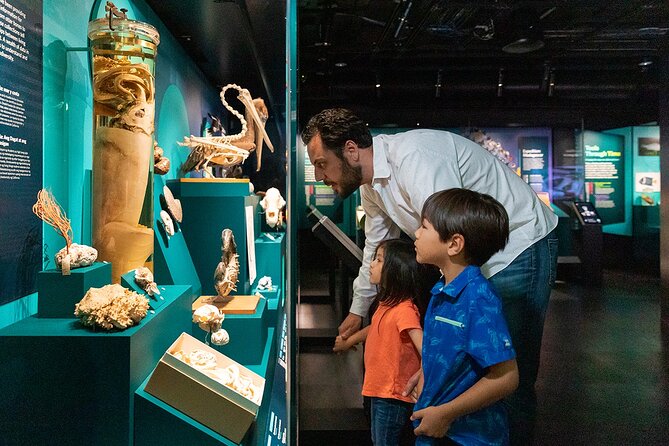
The Venom exhibit presents more than a dozen species and gives the aquarium a different mood from the coral reef galleries. You can also visit the Twilight Zone, which explores marine life from the pitch-black parts of the ocean. That section is valuable because it moves beyond the familiar bright fish and colorful reef displays.
The aquarium works well for children because the animals provide an immediate focus. Adults will find enough scientific information to make the visit more than a series of pretty tanks. A ray pool also offers a chance to speak with staff, and the aquarium’s layout connects naturally with the rainforest and planetarium.
If your time is limited, I would prioritize the aquarium over trying to see every static display. It is one of the places where the Academy’s combination of live animals and science teaching feels most effective.
Morrison Planetarium: reserve your show before exploring
The Morrison Planetarium uses a 75-foot dome screen for shows about space and Earth. The visual format is the attraction here. Instead of looking at a flat screen, you sit beneath a curved image that fills your field of view.
Several show options and times are available each day, and the pass is included with admission. The catch is that you cannot simply assume a seat will be waiting when you arrive. Planetarium passes are first come, first served. Scan the QR code posted in the lobby to reserve a showtime, or use the planetarium pass pickup desk across from the entrance as directed on site.
This is the single most important planning tip for the Academy: deal with the planetarium first. If you wait until the end of the visit, the show you want may be full. Once you have a time, you can visit the aquarium and rainforest around it.
Some shows may not suit children under seven, and children under four are not permitted. Check the program details before promising a show to a young child. The planetarium has been a major hit with older children and adults, especially when the program focuses on the cosmos or the workings of Earth.
The planetarium may occasionally be closed, so it is wise to treat a show as an included bonus rather than the sole reason for buying admission. The rest of the Academy still provides a full visit.
A different sort of San Francisco day, for when the fog rolls in:
- Muir Woods and Sausalito (Return by Bus or Ferry)
★ 4.5 · 5,098 reviews - Big Bus SF: Hop-on Hop-off Tour with 17 Stops and Sunset Option
★ 4.0 · 4,539 reviews - Napa and Sonoma Wine Country Full-Day Tour from San Francisco
★ 4.5 · 4,455 reviews - Small Group Yosemite and Giant Sequoias Day Trip from San Francisco
★ 5.0 · 3,671 reviews
Osher Rainforest: hot, humid, and worth the change of clothes
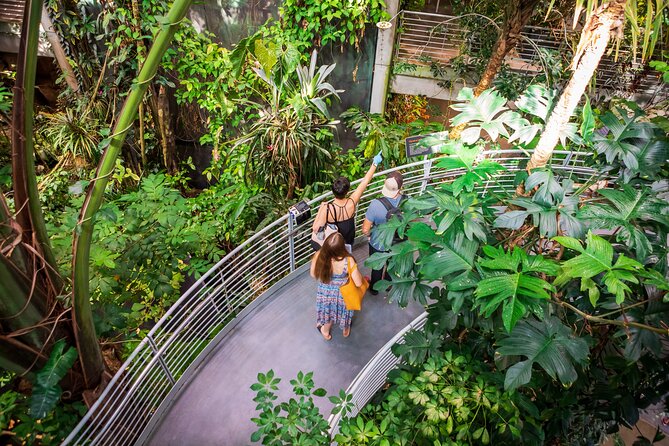
The Osher Rainforest occupies a four-story glass dome. Inside are more than 1,600 plants and animals, including free-flying birds and butterflies, reptiles, golden-silk orb weaver spiders, and large Amazonian fish.
The rainforest is a different experience from the aquarium. You are not looking through one tank after another. The plants surround the paths, the air is warm and humid, and animals may appear above or beside you. The setting helps explain how forest species share one environment.
Allow at least 30 minutes, though you may need longer if butterflies are active or you stop at each level. The heat can feel strong after the cooler museum areas, so dress in layers and be ready for a change in temperature. Comfortable shoes matter here as well as throughout the Academy.
Families often find this section especially memorable because it feels physical and close. The tradeoff is that crowded walkways can make it harder to pause. If the dome is busy, move slowly and accept that you may not see every animal on one pass.
California science and the main museum displays
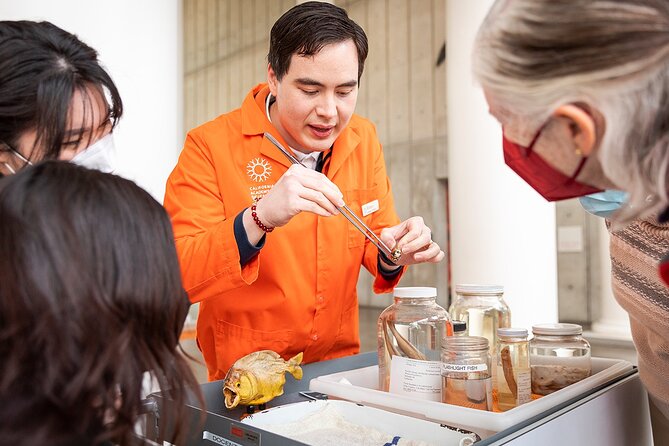
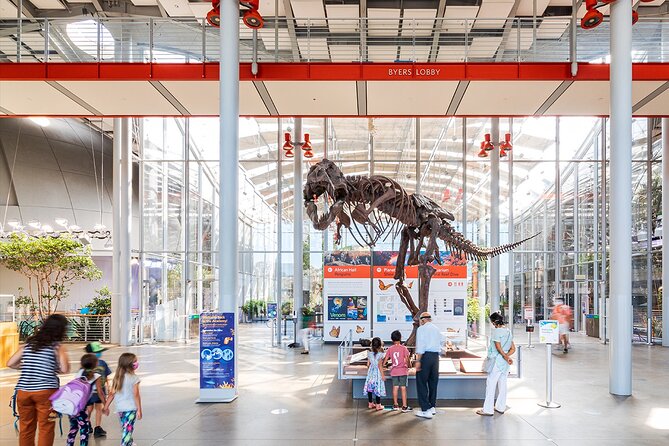
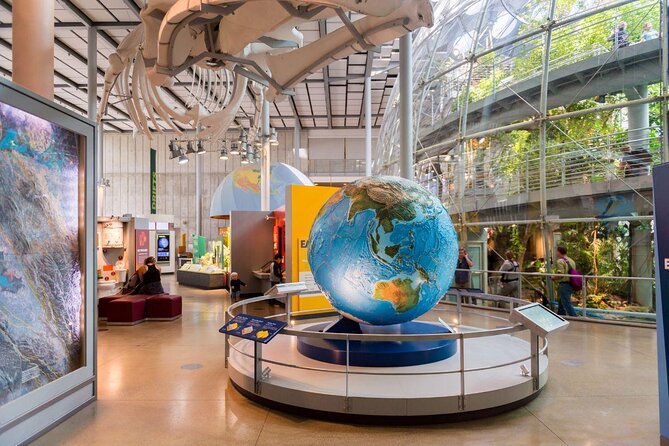
The Academy’s natural history areas bring the focus back to specimens, models, and interactive displays. You can walk beneath the bones of enormous animals, inspect geology collections, and learn about California’s species, places, and people through the California: State of Nature exhibit.
The geology collection includes nearly 400 specimens. That gives the section real substance for adults and older children who want more than a quick photo stop. Displays use scientific specimens, multimedia, models, and hands-on elements to explain the state’s four ecosystems.
The Academy also includes familiar natural history subjects, but expectations matter. If your main goal is a large dinosaur fossil collection, you may find this part less satisfying than the aquarium or rainforest. The dinosaur displays are not the strongest reason to choose this Academy over every other museum.
The hands-on sections are useful for younger children, toddlers, and teens, though some areas can become crowded. One interactive dinosaur puzzle has been a particular hit with families because it gives children something physical to do while adults read the surrounding information.
The earthquake simulator is another popular stop. It gives the science a direct, memorable quality rather than leaving it on a wall panel. Plan time for these interactive displays, since they can slow your route in a good way.
Daily programs, penguins, and small moments
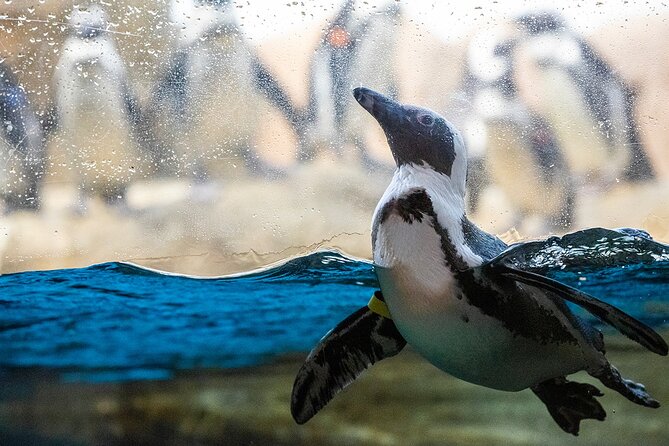
The African penguin colony is one of the Academy’s most dependable crowd-pleasers. Their movement and personality make the exhibit work for children who may not yet care about a long scientific explanation.
Try to catch a feeding if the schedule allows. A biologist answers questions during the program, giving you a chance to connect the animals with their care and behavior. The white alligator Claude is another distinctive resident and an easy detail to remember after the visit.
Daily public programs can include animal feedings and pop-up demonstrations. Since the schedule may affect what you see, look for the day’s program information when you arrive. These short events are worth fitting in because they add live explanation to a self-guided museum visit.
The Academy also presents changing displays. A corpse flower, for example, has drawn strong interest when in bloom. Special specimens may be temporary, so do not assume every unusual display will be there on a later visit.
How long you need and how to plan the route
The advertised visit can take three to five hours. I agree with that range, but the right amount depends on your priorities.
For a brisk three-hour visit, reserve the planetarium first, then see the aquarium, rainforest, and your top natural history exhibits. This gives you the major highlights without trying to read every label.
For four or five hours, add the public programs, interactive displays, California: State of Nature, geology collection, and Wander Woods. Families should allow extra time for children to stop and touch, watch, and ask questions.
A practical order is:
- Reserve the planetarium show immediately after entering.
- Visit the aquarium while your chosen showtime is still ahead.
- Allow around 30 to 45 minutes for the rainforest.
- Use the remaining time for natural history displays, interactive exhibits, and scheduled programs.
- Leave room for food or a short break.
The Academy can feel crowded, especially on Saturdays and popular holidays. Crowds may make the rainforest and hands-on sections harder to enjoy. Starting early and giving yourself a flexible route will help.
Price, food, and the real cost of the day
Admission is $49 per person. For four people, that is $196 before food, parking, or anything else in Golden Gate Park. The price is easier to justify if you use the included planetarium show and spend at least three hours inside.
The value is strongest when you would otherwise pay for several separate attractions. Aquarium admission, a planetarium show, a rainforest, and a natural history museum in one building make this more efficient than visiting unrelated sites across the city.
The value weakens if your group wants only one short exhibit, dislikes indoor museums, or is mainly seeking dinosaur fossils. A busy day can also reduce the sense that you are getting your money’s worth, since popular areas may be difficult to enjoy at your own pace.
Food and drinks are sold at the Academy Café and Terrace Restaurant, with sustainable grab-and-go choices available. On-site food makes the long visit easier, but it adds to the bill. Parking has been listed at $31.25 in one recent experience, so public transportation can make a meaningful difference if it suits your plans.
Free cancellation is available if you cancel at least 24 hours before the start time. Cancellations within 24 hours are not refunded, and late changes are not accepted.
Who should book this Academy ticket?
I recommend it most for families with children of different ages, couples who enjoy science and animals, and adults who want a varied indoor activity in San Francisco. The aquarium and rainforest provide strong visual rewards, while the planetarium and geology displays give the visit more depth.
It also works well for a rainy or cool day, though the rainforest itself is warm and humid. Adults should not dismiss it as a children’s museum. The planetarium, aquarium, California exhibits, and changing research displays offer plenty for grown-ups.
I would think twice if your main aim is a major dinosaur collection, if you have only one hour, or if the $49 admission price is already stretching your budget. You should also check the planetarium schedule and operating hours before committing to a particular day.
Should you book the California Academy of Sciences?
Book this ticket if you want one flexible, family-friendly attraction that combines live animals, space science, plants, and natural history. The aquarium, rainforest, and planetarium are the main reasons to go, and the included programming can fill most of a day.
Skip it if you want a narrowly focused museum or a low-cost quick stop. For most people with three to five hours in Golden Gate Park, though, the Academy offers enough variety to make the admission worthwhile. Reserve the planetarium early, wear comfortable shoes, and keep a little room in your budget for food and parking.
FAQ
What does the California Academy of Sciences ticket include?
The ticket includes instant-access admission to the California Academy of Sciences. Exhibits, public programs, the Steinhart Aquarium, the Morrison Planetarium, and the Osher Rainforest are included with admission.
How much does admission cost?
The listed price is $49 per person.
How long should I plan for the Academy?
Plan for about three to five hours. A shorter visit can cover the main highlights, while a longer visit gives you time for programs, interactive exhibits, and breaks.
Do I need to exchange my mobile ticket?
No. The mobile ticket provides direct entry, so you can skip a separate voucher redemption kiosk.
Is the planetarium included?
Yes. Planetarium show passes are included with admission, but they are available on a first-come, first-served basis.
How do I reserve a planetarium show?
When you arrive, scan the QR code posted in the lobby to reserve a showtime. A planetarium pass pickup desk is also located across from the planetarium entrance.
Are planetarium shows suitable for young children?
Some shows may not be appropriate for children under seven. Children under four are not permitted in the planetarium.
What animals can I see?
The Academy has nearly 60,000 live animals, including African penguins, a white alligator named Claude, butterflies, birds, reptiles, spiders, Amazonian fish, and many aquarium species.
Is food available inside?
Yes. Sustainable grab-and-go food and drinks are available at the Academy Café and Terrace Restaurant.
Can I cancel for a refund?
You can receive a full refund if you cancel at least 24 hours before the experience start time. Cancellations or changes made within 24 hours are not accepted for a refund.
Newest San Francisco write-ups
- Filoli House & Garden★ 5.0 · 20 reviews
- Fisherman’s Wharf & Pier 39 Food Tour – Includes Full Meal, 3 hrs★ 5.0 · 9 reviews
- San Francisco Four Peaks Tour★ 4.0 · 4 reviews
- Express San Francisco Layover Tour w Airport Pickup and Dropoff★ 5.0 · 6 reviews
- Napa Valley Wine and Food Tasting Tour from San Francisco★ 5.0 · 7 reviews
- Experience the Thrills of Yosemite: 3-Day Package★ 5.0 · 3 reviews
- Early Bird: Electric Scooter Rental to Golden Gate Bridge★ 5.0 · 6 reviews
- San Francisco Gregangelo Museum – Immersive Kids’ Tour★ 5.0 · 5 reviews
Tickets, compared.

Best Alcatraz Prison Tickets & San Francisco Combo Tour
Read our review →
San Francisco Museum of Modern Art General Admission Ticket
Read our review →
San Francisco Morning City Tour & Afternoon Alcatraz Ticket
Read our review →