
Reviewed · SAN FRANCISCO ESCAPE ROOMS
Outdoor Escape Room in San Francisco – SOMA/Embarcadero
San Francisco becomes the game board in this outdoor escape room, where your group races through SOMA and the Embarcadero to finish an anti-earthquake device. You search for real-world clues, solve puzzles, and enter answers into an app that sends you to the next part of the challenge.
I like the way the game gets you outside instead of locking you in a themed room, and I like that one $75 ticket covers up to six people. It can also send you toward city sights you might otherwise walk past.
The main consideration is your start time. A Sunday morning in the Financial District can feel quiet, and one player noted unwanted approaches from people asking for money. A busier time may feel more comfortable, though busy sidewalks can make clue hunting less relaxed.
Key points at a glance

- Lotta’s Fountain is the starting and ending point, making the route easy to organize around a central downtown landmark.
- The city itself provides the clues, with the activity moving through SOMA and the Embarcadero rather than staying in one room.
- A physical puzzle box and mobile app work together, so you need to manage both tangible clues and digital answers.
- The earthquake story gives the game a clear purpose, as your group works to complete an invention before another tremor hits.
- The private format suits one group of up to six, with no strangers added to your team.
- Plan about two hours, but your pace and experience with puzzles can affect the total time.
San Francisco turns into your puzzle room
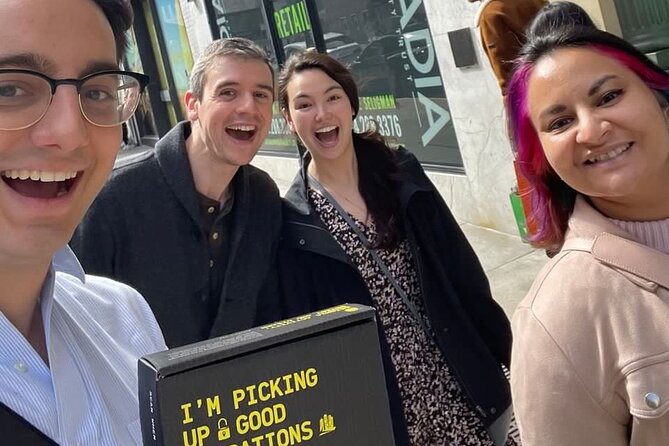
The basic idea is wonderfully simple: instead of searching a decorated room for a key, you search downtown San Francisco for the next answer. Your group begins at Lotta’s Fountain, then follows a chain of clues around the SOMA and Embarcadero area.
The story gives the activity some urgency. You are close to finishing an anti-earthquake invention when a tremor strikes. Now you need to work quickly, find the missing information, and complete the device before the city is in trouble.
That plot is playful rather than a serious history lesson, but it gives each puzzle a reason to exist. You are not just collecting random letters from street signs. You are trying to advance a city-saving invention, at least within the game’s world.
I especially like this format for people who have already done traditional escape rooms. You get the same satisfaction of spotting patterns and cracking answers, but the setting keeps changing. You also have to notice your surroundings, move as a team, and decide which details matter.
The tradeoff is that an outdoor game has less control than an indoor one. Street noise, pedestrians, weather, and the general feel of downtown all become part of the experience. That can make the game feel more real, but it can also distract you.
More escape rooms in San Francisco:
- The Escape Game San Francisco: Epic 60-Minute Adventures Downtown
★ 5.0 · 334 reviews - The Escape Game San Francisco in Fisherman’s Wharf
★ 5.0 · 97 reviews - Prison Break Alcatraz Escape Room in Fisherman’s Wharf
★ 5.0 · 96 reviews
Starting at Lotta’s Fountain
Your meeting point is Lotta’s Fountain on Kearny Street. This gives you a clear downtown location rather than an obscure storefront or private office. The activity also ends back at the same meeting point, which makes planning easier if you have dinner, transit, or another San Francisco stop afterward.
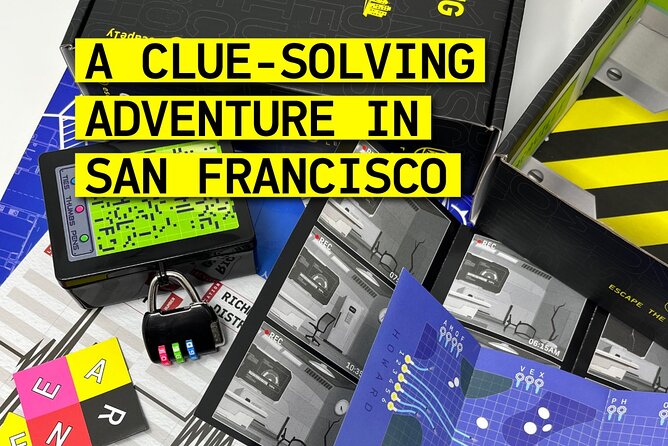
At the beginning, you receive the setup for the adventure and work with the physical puzzle box. The box is part of the game itself, not just a container for instructions. Your group uses it along with clues found in the city.
You will also use an app to enter solutions. When an answer is correct, the app tells you where to go next. That system keeps the route moving without requiring a guide to lead you from place to place.
Because the activity is private, your group can discuss ideas without worrying about strangers taking over the puzzle. A team of six gives you enough people to split up visual searching and compare theories, while a smaller group may feel more focused.
The best team is not necessarily the biggest one. Six people can produce plenty of ideas, but they can also talk over one another. If your group is large, choose someone to handle the app, someone to keep track of the physical clues, and someone to make sure nobody wanders off while the rest of you are solving.
Following clues through SOMA and the Embarcadero
The route takes you through SOMA and the Embarcadero, two parts of San Francisco that reward careful looking. The point is not to march from one attraction to another while a guide recites facts. You are actively searching the public surroundings for information that helps solve the next puzzle.
That changes the way you see downtown. A building detail, public feature, sign, or other real-world element may become important because the game directs your attention toward it. You may also notice sights that you would normally pass on the way to a museum, ferry, restaurant, or office.
The experience does not list every stop in advance, so you should not book it expecting a fixed sightseeing route. The next location depends on your answers in the app. The fun comes from discovering where the clues lead, not from knowing the complete path before you start.
You should wear comfortable shoes and allow yourself room to look around. The activity lasts about two hours, and the walking is tied to puzzle solving rather than a formal tour pace. If you stop often to test theories or study clues, the game may take more or less time than another group’s session.
The outdoor setting also means you need to pay attention to ordinary city safety. Keep your group together near streets and intersections, and do not let the puzzle make you ignore traffic or your surroundings. On a quiet Sunday morning, the area may feel less crowded but also less comfortable for some people. The practical advice is to choose a time when you feel at ease being downtown, with enough public activity around you without making the clues impossible to examine.
How the physical box and app share the work
The game uses two kinds of problem solving. The physical box gives you something concrete to inspect and manipulate, while the city supplies the real-world clues. The app then checks your answers and sends you forward.
That combination is useful because it prevents the experience from becoming only a phone game. You are not simply staring at a screen and following a digital map. You need to compare what you see around you with what the box and story are asking you to find.
At the same time, the app provides structure. If you solve a clue, you are not left guessing whether your answer is right or where you should walk next. Entering the solution gives your group a clear response and keeps the adventure moving.
Your group will need a basic plan for handling the tools. One person can hold the box, another can read the instructions, and a third can manage the app. Rotate those jobs if everyone wants a turn. The key is to avoid having six people crowd around one phone while nobody watches the surroundings.
The puzzle difficulty is described as a middle ground: enough challenge to feel satisfying, without turning the outing into a frustrating contest. That balance matters for mixed groups. If one person loves riddles and another rarely plays escape games, the outdoor format gives both of them ways to contribute. One player may spot a physical detail while another sees the pattern in the puzzle.
A different sort of San Francisco day, for when the fog rolls in:
- Muir Woods and Sausalito (Return by Bus or Ferry)
★ 4.5 · 5,098 reviews - Big Bus SF: Hop-on Hop-off Tour with 17 Stops and Sunset Option
★ 4.0 · 4,539 reviews - Napa and Sonoma Wine Country Full-Day Tour from San Francisco
★ 4.5 · 4,455 reviews - Small Group Yosemite and Giant Sequoias Day Trip from San Francisco
★ 5.0 · 3,671 reviews
The earthquake theme adds a ticking clock
The anti-earthquake invention is a lighthearted reason to keep moving. A tremor has interrupted your final work, and now your team needs to complete the device in time to protect San Francisco.
The story is especially well matched to the setting. San Francisco is closely associated with earthquakes, so the theme feels connected to the city rather than pasted onto an unrelated scavenger hunt. You are still playing a fictional adventure, but the premise fits the place.
Do not expect a museum-style explanation of earthquakes or a technical lesson about engineering. The theme supplies atmosphere and motivation. The real challenge is reading clues, finding connections, and entering correct solutions.
For families, friends, and colleagues, this kind of shared goal can work better than a sightseeing activity where everyone simply follows one leader. You have to communicate. You may also discover that the quiet observer in your group is the one who notices the clue everyone else misses.
The countdown feeling may be stronger for experienced escape-room players than for people new to the format. If you are new, take time to understand how the physical box and app work before rushing. The game is designed to be completed in about two hours, but speed alone is not the point.
What the $75 price means for your group
The cost is $75 per group, not $75 per person, and one booking covers up to six people. For six players, that works out to $12.50 each. For four players, it is $18.75 each. A pair would pay $37.50 per person.
That group pricing makes the activity much more appealing for friends or families who can fill most of the six available places. A small private team pays more per person, but you also get an experience built entirely around your own group rather than a shared outing with strangers.
The value depends on what you want from downtown sightseeing. If you are looking for a traditional guided tour with detailed commentary at each stop, this is not that. You are paying for a structured game, a private format, a physical puzzle box, app access, and roughly two hours of city exploration.
I think the price is easiest to justify when you already enjoy escape rooms, scavenger hunts, or cooperative puzzles. It is also a practical choice for a birthday, family outing, or team activity where the shared challenge matters more than a long list of formal attractions.
The value is less clear if your group dislikes phone-based activities or becomes impatient with puzzles. The city is the setting, but the main purpose is solving. You should choose another activity if you want to spend two hours simply taking photos and wandering without a task.
Choosing the right time and group
The activity is available daily from 6:00 AM to 8:00 PM during the listed operating period, which runs through February 1, 2027. That broad window gives you room to fit the game around a morning arrival, an afternoon outing, or an evening plan.
I would think about downtown conditions before choosing an especially quiet hour. One Sunday morning outing felt less crowded in the Financial District, but it also brought unwanted approaches from people asking for money. A busier time may provide a greater sense of comfort and activity, though your group may need to wait for space around public clues.
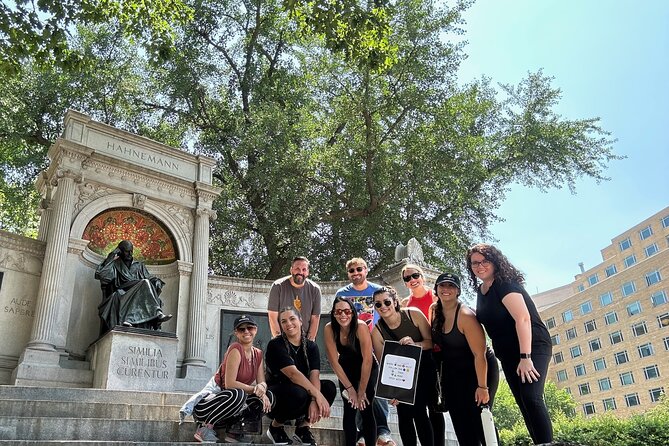
A private team of two to six works best when everyone agrees on the pace. Competitive groups may want to finish quickly. Casual groups may spend more time exploring along the route. The stated two-hour duration is an estimate, not a promise that every team will finish at exactly the same minute.
You do not need to be an expert puzzle player. The activity is designed for most people to participate, and the challenge is meant to balance fun with difficulty. Still, younger children may need help reading clues or using the app, and the supplied information does not specify a minimum age.
The activity is near public transportation, so you can reach the downtown starting point without arranging a private vehicle. The exact transit line is not provided, so check your route before booking if you are arriving from outside central San Francisco.
Practical details before you book

Confirmation is normally provided at booking. If you book within seven days of the activity, confirmation may arrive within 48 hours and remains subject to availability. This is worth checking before you build a tight same-day schedule around the game.
Service animals are allowed, and most people can participate. Since the activity takes place outdoors and involves moving through city streets, consider your group’s comfort with walking and standing. Specific distance, step-free routing, restroom access, and weather procedures are not provided, so ask the operator if any of those details are important to you.
The activity is non-refundable and cannot be changed for any reason. If your plans are uncertain, that rule matters more than the relatively low group price. Confirm your date, group size, and schedule before paying.
The operator is Escapely. No guide names are provided because this is a self-directed activity rather than a standard tour led continuously by a person. Your group follows the physical clues and app prompts on its own.
Should you book the SOMA outdoor escape room?
Book it if you want a private, active puzzle outing that gives you a reason to pay close attention to downtown San Francisco. The strongest reasons are the citywide game board, the earthquake theme, the shared physical box, and the group price for up to six people.
I would choose a busier daytime slot if your group feels uneasy in quiet downtown areas. I would also make sure everyone understands that this is a puzzle adventure first and a sightseeing tour second.
Skip it if you want a detailed guide-led tour, a guaranteed list of famous stops, or a completely flexible walk. But if your group enjoys riddles and cooperative games, the $75 flat price can buy two memorable hours of exploring SOMA and the Embarcadero with a clear mission.
FAQ
Where does the outdoor escape room start?
It starts at Lotta’s Fountain on Kearny Street in San Francisco, California.
Where does the activity end?
The activity ends back at the meeting point, Lotta’s Fountain.
How long does the game last?
Plan for about two hours. The actual time can vary depending on your experience level and how much time your group spends exploring.
How many people can join one booking?
One ticket covers a private group of up to six people.
How much does the experience cost?
The price is $75 per group of up to six people.
What areas of San Francisco does the game use?
The game takes place around the SOMA and Embarcadero areas, with real-world clues found throughout the city route.
Do I need to use a phone or app?
Yes. Your group enters puzzle solutions into an app, which tells you where to go next. The experience also includes a physical puzzle box and clues found in the real world.
Can I cancel or change my booking?
No. The experience is non-refundable and cannot be changed for any reason.
Newest San Francisco write-ups
- Filoli House & Garden★ 5.0 · 20 reviews
- Fisherman’s Wharf & Pier 39 Food Tour – Includes Full Meal, 3 hrs★ 5.0 · 9 reviews
- San Francisco Four Peaks Tour★ 4.0 · 4 reviews
- Express San Francisco Layover Tour w Airport Pickup and Dropoff★ 5.0 · 6 reviews
- Napa Valley Wine and Food Tasting Tour from San Francisco★ 5.0 · 7 reviews
- Experience the Thrills of Yosemite: 3-Day Package★ 5.0 · 3 reviews
- Early Bird: Electric Scooter Rental to Golden Gate Bridge★ 5.0 · 6 reviews
- San Francisco Gregangelo Museum – Immersive Kids’ Tour★ 5.0 · 5 reviews
San Francisco Escape Rooms, compared.

The Escape Game San Francisco: Epic 60-Minute Adventures Downtown
Read our review →
The Escape Game San Francisco in Fisherman’s Wharf
Read our review →
Prison Break Alcatraz Escape Room in Fisherman’s Wharf
Read our review →
The Escape Game: Epic 60-Minute Adventures in San Francisco
Read our review →
The Escape Game at Fisherman’s Wharf in San Francisco
Read our review →Browse the lists this tour appears in