
Reviewed · SAN FRANCISCO
San Francisco Indoor Skydiving with 2 Flights & Personalized Certificate
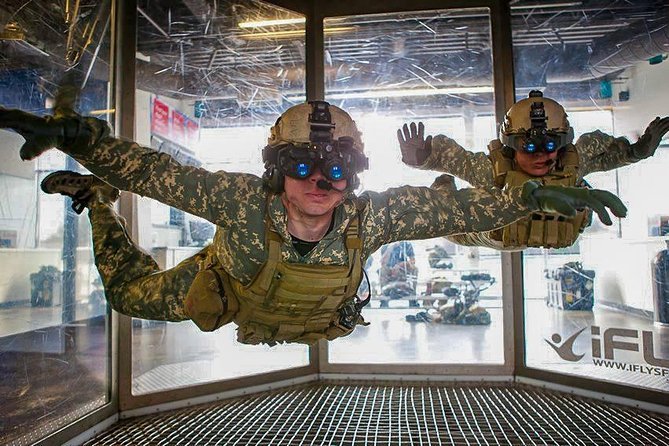
The most surprising part of this indoor flight is how quickly floating feels natural. You do not leap from a plane or feel yourself drop. The 800-horsepower tunnel sends air upward at up to 175 mph, holding you in place while an instructor guides your arms, legs, and posture.
I like two things right away: two full 60-second flights, which gives you time to settle in and then improve, and the close coaching. Instructors stay with you in the chamber, and a second flight may include a higher climb if you are comfortable. The personalized certificate is a small but worthwhile souvenir.
The main drawback is location. iFLY San Francisco Bay is in Union City, not central San Francisco, and the drive can take about an hour and a half from the city. You also need to arrive on time, follow health and weight rules, and accept that this is a scheduled activity rather than a drop-in thrill.
Key points to know before you book
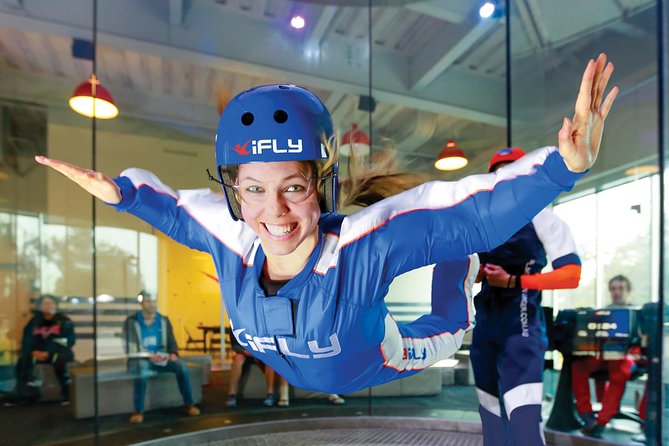
- Two 60-second flights: Your first flight teaches the basics, while the second lets you feel more in control.
- Union City location: The venue is at 31310 Alvarado-Niles Road, well outside central San Francisco.
- One-on-one instruction: You share the session, but you fly individually with a certified instructor.
- High-flight option: If your instructor approves, you may rise higher in the tunnel during your second flight.
- Suitable for many ages: Children can fly from age 3, and there is no stated upper age limit.
- Personal certificate included: You leave with a personalized flight achievement certificate.
What indoor skydiving near San Francisco is really like
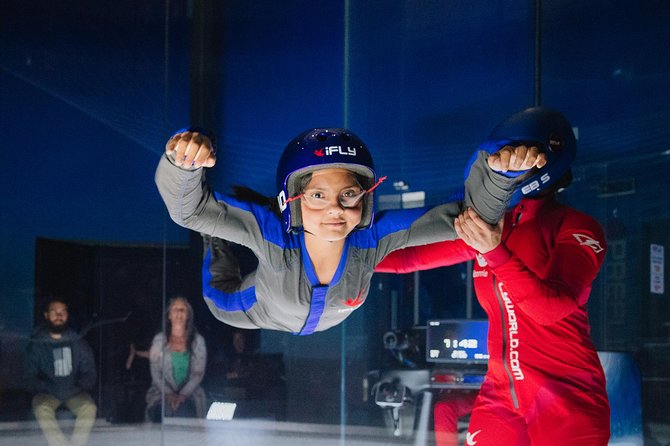
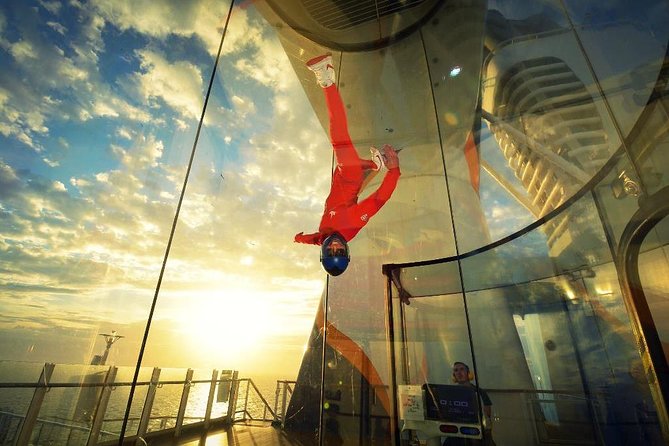
This is not a simulation where you sit in a machine and watch a screen. You wear a flight suit, goggles, helmet, and other supplied equipment, then enter a glass-sided vertical wind tunnel where a powerful column of air supports your body.
The air moves fast, but the feeling is less like falling and more like lying on a firm, invisible mattress. You breathe normally. The FAQ compares the sensation to putting your head out of a moving car, although inside the chamber the airflow is controlled and stable.
Your instructor helps you hold the basic body position. Small changes matter. A slight shift of an arm or leg can send you turning, rising, or drifting, so the first flight is mostly about listening and staying calm.
The tunnel reaches speeds from roughly 130 to 175 mph, or 209 to 282 kph. That number sounds dramatic, but it describes the air speed needed to support different bodies and positions, not the speed at which you travel across the room.
Other ways to spend a day in San Francisco:
- Muir Woods and Sausalito (Return by Bus or Ferry)
★ 4.5 · 5,098 reviews - Big Bus SF: Hop-on Hop-off Tour with 17 Stops and Sunset Option
★ 4.0 · 4,539 reviews - Napa and Sonoma Wine Country Full-Day Tour from San Francisco
★ 4.5 · 4,455 reviews
Arriving at iFLY San Francisco Bay in Union City
The meeting point is iFLY Indoor Skydiving at 31310 Alvarado-Niles Road in Union City. If you are staying in San Francisco, build in generous driving time. One of the supplied accounts puts the trip at around an hour and a half, though the exact journey depends on traffic and where you start.
Plan to arrive 10 to 15 minutes early. Your session begins promptly, and arriving late can eat into the briefing or create a problem with your reservation. This is especially important if you are bringing children, since a parent or guardian must sign the waiver for anyone under 18.
At check-in, you will complete the necessary paperwork, receive your equipment, and join the scheduled group. The published details describe groups of up to six in one part of the tour information and up to 12 in another. In either case, the important point is that you do not spend the whole session flying at once. You take your turn in the chamber while the others watch and prepare.
That shared setup can be useful. Family and friends can see what is happening from the observation area, and you can watch other first-time flyers before your own turn. It also means the total appointment lasts much longer than the actual time in the air.
Training first, then the flight suit
Every first-time flyer must attend the training session. This is not filler. You learn the hand signals, the safe body position, how to enter and leave the chamber, and how to respond to the instructor without speaking over the wind.
The staff then helps you put on the flight gear. Wear comfortable clothes under the suit, preferably pants and a shirt without a collar. Well-fitting lace-up sneakers or running shoes are recommended. Long hair should be braided and secured in a low bun.
Remove watches, rings, necklaces, bracelets, loose earrings, and hair accessories. Empty your pockets. Lockers are available, but leaving valuables at home is the simpler choice.
You can wear eyeglasses, with larger goggles placed over them. The flight suit also has a practical purpose: instructors can hold its handles if they need to steady or reposition you.
The staff’s approach is a strong part of the experience. Randy is specifically praised for being friendly and entertaining, while another account credits Shawn, or possibly Shaun, with professional and enthusiastic instruction. The names may vary by session, but the useful takeaway is that the instructors are accustomed to working with first-timers, children, older adults, and nervous flyers.
Your first 60-second flight
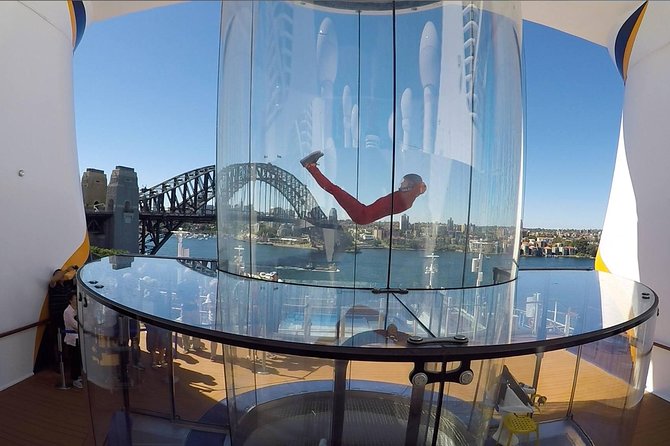
When it is your turn, the tunnel operator gradually increases the air speed until you are supported. Your instructor enters with you and helps you find the correct position.
The first few seconds can feel busy. You are concentrating on your arms, legs, chin, and breathing while the air pushes against every loose part of your clothing. Then the basic idea clicks: keep your body relaxed, look toward the instructor, and make small corrections.
Your instructor remains beside you throughout the flight. This is why the experience is suitable for people with no previous skydiving or flight background. You are not expected to know how to control yourself before entering the chamber.
The first flight is mainly a lesson, but it is still the moment when the novelty hits. You are suspended above the net without a plane, parachute, or free-fall drop. For many people, that strange lack of falling is more memorable than the speed of the air.
At the end, the instructor helps you exit safely. You then return to the waiting area while another person flies. Use that time to watch the instructor’s hand signals and notice how small movements affect the body.
A different sort of San Francisco day, for when the fog rolls in:
- Small Group Yosemite and Giant Sequoias Day Trip from San Francisco
★ 5.0 · 3,671 reviews - San Francisco: Golden Gate Bay Cruise
★ 4.7 · 3,644 reviews - San Francisco: Hop-On Hop-Off Sightseeing Tour with 17 Stops
★ 4.5 · 3,600 reviews - Yosemite Highlights & Giant Sequoias Day Tour from San Francisco
★ 4.5 · 3,455 reviews
The second flight and the high-flight option
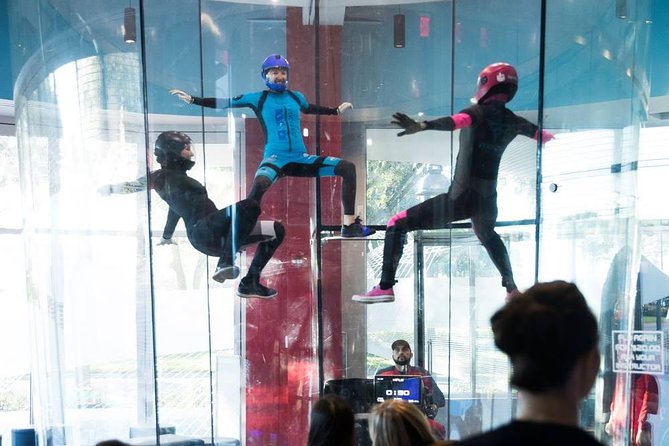
The second 60-second flight is where the activity usually feels more rewarding. You already know how to enter the chamber and what the airflow feels like, so you can spend less time managing nerves and more time responding to the instructor.
Some flyers can make turns or move around during their first session, but flips and advanced tricks are reserved for experienced participants. Do not expect to perform acrobatics just because you are having a good first day. Ask your instructor how far you can safely progress.
A popular option is the high flight. If your instructor decides you are ready, they may take you higher up the chamber and bring you back down in a controlled motion. One account describes the high flight as the best part, while another highlights a dramatic instructor performance at the end, including a Spider-Man-style demonstration.
These instructor demonstrations are not part of your own skill level, so keep expectations sensible. The point is to show what trained flyers can do, not to make you feel pressured to copy them.
If you prefer to stay low, you can do that. The high flight is an option, not a requirement, and your comfort matters more than height.
Why the two-flight format offers good value
The price is $125 per person, including two flights, training, equipment, instructor guidance, taxes, fees, and the certificate. Food, drinks, and hotel transportation are not included.
That is not a cheap casual activity, especially if you are booking for a family. Still, the price is easier to justify than it would be for a single short turn. The two-flight structure gives you a real chance to adjust, and the entire appointment lasts about 75 minutes according to the tour details. The FAQ gives a longer estimate of about 90 minutes for the full first-time-flyer visit, so allow at least that much time rather than planning a tight connection afterward.
You are paying for specialist equipment, trained staff, safety instruction, and individual time in a large commercial wind tunnel. It is best viewed as a planned occasion, not a bargain attraction.
I would consider it good value for a birthday, family outing, or a special activity that several age groups can share. It also works well for someone curious about skydiving but not ready to jump from an aircraft.
Who should book this experience
This suits a wide range of people. Children as young as 3 can participate, and the supplied information gives no upper age limit. One family used the activity to celebrate a 71-year-old woman, her 29-year-old son, and his girlfriend, which shows why the format works for mixed-age groups.
It can also suit older adults who are reasonably mobile and meet the health rules. A couple in their 60s found the staff attentive and reassuring, and one chose the high-flight option.
Families should like the observation area and the patient instruction. Children may need help staying focused during the briefing, but the staff is used to teaching younger flyers.
You should not fly if you are pregnant, have certain neck, back, heart, or shoulder conditions, or are wearing a hard cast. Anyone with a previous injury or shoulder dislocation should check the restrictions carefully before booking.
There is a stated weight limit of under 300 pounds. If you weigh between 260 and 300 pounds, note your current weight when booking and expect an additional evaluation at check-in. Staff may apply extra restrictions or decide that the tunnel cannot accommodate you.
Getting the most from your visit
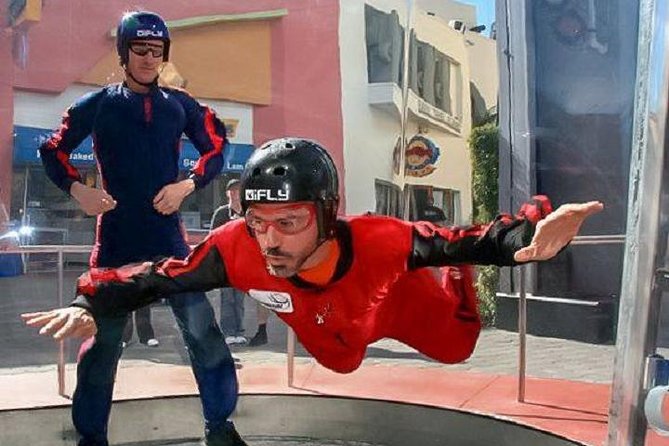
Wear simple, secure clothing and good sneakers. Loose jewelry and accessories are a nuisance at best and a safety problem at worst.
Listen closely during the briefing. The hand signals and body position are more useful than trying to force yourself into a certain pose. Relaxing your shoulders and making small movements will help more than wrestling with the air.
For your first flight, focus on staying stable. For the second, ask whether a turn, higher climb, or another basic skill is suitable for you. The instructor can judge your progress better than you can from inside the chamber.
If friends or relatives are not flying, bring them along to watch. The observation area lets them follow the session, and the shared group format gives them something to see during your turn.
Book ahead if your schedule is fixed. This activity is booked, on average, 35 days in advance, which suggests that popular times can fill well before the day. If you need to change the date or time, call the Union City location directly. Changes cannot be made through another method.
Cancellation is free until 24 hours before the start time. Inside that window, the payment is not refunded and changes are not accepted.
Is the trip from San Francisco worth it?
The Union City location is the main practical compromise. It is not a quick stop in the heart of San Francisco, and the drive may take around 90 minutes each way. If your itinerary is packed with city sightseeing, adding this activity can take much of a day.
The distance makes more sense if you are already visiting the East Bay, driving through the area, or treating indoor flight as the day’s main event. One early booking can also leave you back in San Francisco before midday, depending on your travel time and appointment slot.
This is not a sightseeing activity, so you will not gain city views or local history along the way. What you get is a focused physical experience that is hard to duplicate in a normal museum or attraction.
Should you book it?
Book this if you want a controlled, high-energy activity with real coaching and no aircraft jump. The two-flight format is the key advantage, since the second turn lets you move beyond the first burst of nerves. It is also a strong choice for mixed-age families and celebrations.
Skip it if you are looking for a central San Francisco activity, dislike wearing shared gear, or have a strict health or weight restriction that may prevent participation. The price and drive are significant, but for a birthday, family outing, or first taste of skydiving, the personal instruction and high-flight option make the experience worth serious consideration.
FAQ
How does the San Francisco indoor skydiving experience work?
An 800-horsepower vertical wind tunnel moves and compresses air into a smooth upward column. That airflow supports your body so you can float without jumping from a plane.
How long is each flight?
Each flight lasts 60 seconds. You receive two flights, one at a time with your instructor.
How long does the full appointment take?
The tour details describe the experience as about 75 minutes from start to finish. The FAQ advises allowing about 90 minutes for the full first-time-flyer visit, so plan for that longer window.
Where does the activity take place?
It takes place at iFLY San Francisco Bay, 31310 Alvarado-Niles Road, Union City, California 94587.
Do I need previous experience?
No. First-time flyers receive a required training session, and a certified instructor guides you inside the chamber.
What should I wear?
Wear comfortable clothes and well-fitting, lace-up sneakers or running shoes. Avoid loose jewelry and accessories. Long hair should be braided and secured in a low bun.
What is the minimum age and are there weight limits?
The minimum age is 3, with no stated upper age limit. Participants must weigh under 300 pounds. People between 260 and 300 pounds require an additional evaluation at check-in.
Can I cancel or reschedule?
You can cancel for a full refund up to 24 hours before the start time. Within 24 hours, refunds and changes are not accepted. To reschedule, call the location directly.
Newest San Francisco write-ups
- Yosemite Valley: 3-Day Lodging Adventure★ 4.9 · 9 reviews
- From San Francisco: Yosemite & Tahoe Sierras 4-Day Trip★ 5.0 · 4 reviews
- San Francisco: Turkish Mosaic Lamp Workshop★ 4.2 · 12 reviews
- From San Francisco: Yosemite Private Full-Day Trip★ 5.0 · 13 reviews
- San Francisco Airport 1-Way Transfer to/from the City★ 4.8 · 36 reviews
- Hop-On Hop-Off Deluxe Bus Tour of San Francisco: 2 Days, 20 Stops★ 3.5 · 12 reviews
- Redwoods of Marin and Mt. Tamalpais Walking Tour with Local Guide★ 5.0 · 9 reviews
- Yosemite and Tahoe from San Francisco: 4 Day Sierra Nevada Tour★ 5.0 · 13 reviews