Reviewed · TOURS
San Francisco: Vegas, Sedona, Antelope, 7-Day Tour
San Francisco is only the opening act. The real payoff comes as the route moves from Pacific views to Las Vegas lights, Sedona’s red rocks, Monument Valley’s sandstone towers, and the narrow curves of Antelope Canyon. You cover three states without renting a car, while hotels, breakfast, transport, and several major admission fees are handled for you.
I like the one-way design, which saves you from retracing your route to San Francisco. I also like the mix of famous sights and strong local experiences, especially the San Francisco Bay cruise and the Navajo-led jeep ride in Monument Valley. The catch is the pace: long drives, early starts, short visits, changing guides, and possible discomfort in a smaller vehicle can test your patience.
Key points at a glance
- A true one-way route: Start in San Francisco and finish at the Luxor Hotel in Las Vegas, with no return to California included.
- The best scenery comes later: Sedona, Horseshoe Bend, Monument Valley, Antelope Canyon, and Valley of Fire form the strongest part of the trip.
- Monument Valley includes a Navajo-led jeep tour: This is more than a roadside photo stop and gets you down among the sandstone formations.
- Six hotel nights and six breakfasts are included: In Las Vegas, breakfast may be replaced by a $10 daily allowance.
- Expect a multilingual group: Guides may speak several languages, which can reduce the amount of English commentary.
- Pack light and walk well: Bring one piece of luggage and one small carry-on, and be ready to walk 1.5 miles over uneven ground.
What this seven-day route really delivers
This is a sightseeing sweep, not a slow regional holiday. You will see a remarkable number of major American sights in one week, but you will rarely have a full day in one place. I would choose it for access and variety, not for long lunches, quiet museum time, or independent wandering.
The tour begins at 8:30 a.m. at 100 Larkin Street in San Francisco. Hotel pickup is not provided, so you need to reach the meeting point yourself. The tour ends in Las Vegas at the Luxor Hotel, a useful arrangement if you want to continue in Nevada, but an important detail if you are planning a round trip from San Francisco.
The vehicle depends on group size. A full-size air-conditioned coach may have Wi-Fi, though it is not intended for streaming. Smaller groups can travel by van instead. That can feel more personal, but one account describes the smaller vehicle as cramped, with harsh air conditioning, poor suspension, limited forward visibility, and no charging facilities. Bring a phone power bank, a light layer, and modest expectations about road comfort.
Other ways to spend a day in San Francisco:
- Muir Woods and Sausalito (Return by Bus or Ferry)
★ 4.5 · 5,098 reviews - Big Bus SF: Hop-on Hop-off Tour with 17 Stops and Sunset Option
★ 4.0 · 4,539 reviews - Napa and Sonoma Wine Country Full-Day Tour from San Francisco
★ 4.5 · 4,455 reviews
San Francisco Bay, bridges, and city views
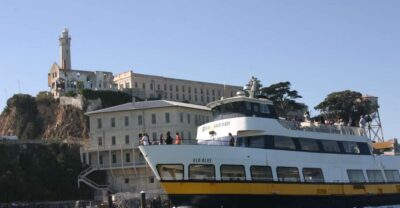
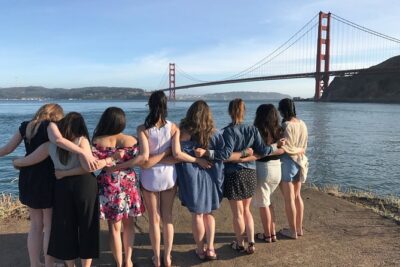
The first day packs in a lot of San Francisco. The Bay cruise is the strongest opening move. From the water, you get views toward the Golden Gate Bridge and Alcatraz Island, and the city’s hills make more sense when seen from the bay rather than from a crowded street.
Fisherman’s Wharf provides the starting point, though only about 20 minutes is set aside there. That is enough to get oriented, not enough for a leisurely meal or a full visit to the area’s attractions. The cruise lasts about an hour, with another short stop listed around the Bay Bridge.
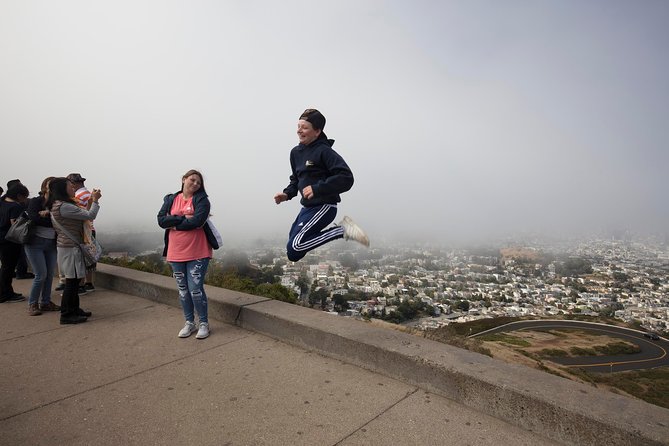
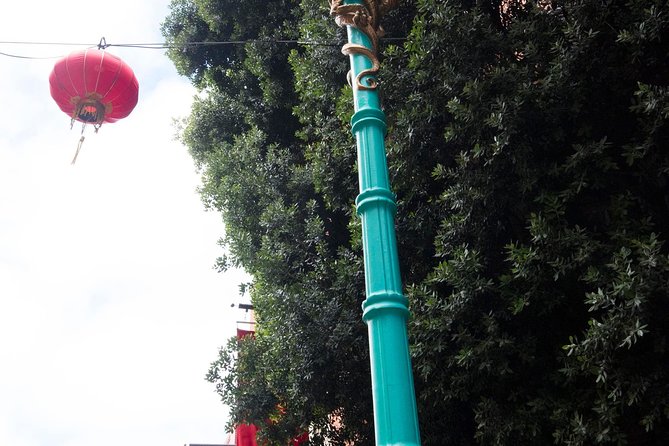
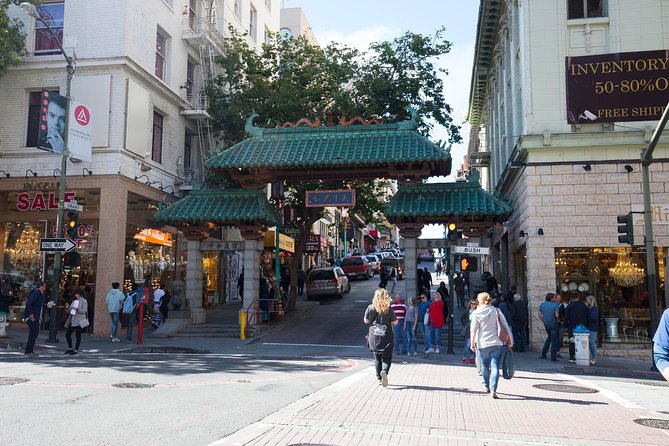
The route also includes the Golden Gate Bridge, Twin Peaks, Chinatown, Sausalito, and a nighttime city view from the Bay Bridge. These are useful snapshots. Twin Peaks gives you a broad view of the city, while Chinatown offers a quick taste of one of San Francisco’s most distinctive districts. Do not expect deep exploration. The schedule is built around seeing the major angles and moving on.
A small point worth watching: the day’s schedule describes the opening around Fisherman’s Wharf, while the official meeting point is downtown at 100 Larkin Street. Follow the confirmed departure instructions carefully and allow time to reach the start point.
Monterey, Carmel, and the California coast

Day two heads south to Monterey, Carmel-by-the-Sea, and either scenic Highway 1 or the 17-Mile Drive. Monterey gets about two hours, including the wharf and Cannery Row. Former sardine factories now frame a waterfront area designed for strolling, shops, and views across the bay.
Carmel receives another two hours. This small coastal town is known for its storybook feel and for Clint Eastwood’s years as mayor. The stop is well chosen for a walking break after the first day in the city, but the town’s compact streets and galleries can make two hours pass quickly.
The coastal drive is one of the day’s best features, but the exact route depends on the vehicle. Smaller vehicles may use Highway 1, while full-size buses may use the 17-Mile Drive. That matters if you have your heart set on one particular road. The 17-Mile Drive provides a controlled coastal route with dramatic viewpoints, while Highway 1 offers the feeling of a longer road journey.
The itinerary text refers to returning toward Los Angeles, but the broader route continues east to Las Vegas. Treat this as a California coast day followed by a transfer toward Nevada, not as a Los Angeles tour. The time on the road is substantial, so use the stops for walking and photos rather than expecting a relaxed coastal vacation.
Barstow, the desert, and Las Vegas after dark
Day three crosses the desert toward Las Vegas, with a two-hour lunch stop at the Barstow outlet mall. The stop includes major brands such as Levi’s, Nike, Reebok, Timberland, and Ralph Lauren. If you enjoy bargain shopping, this is useful. If you would rather spend more time on scenery, two hours can feel long.
The route passes through the Mojave Desert and Death Valley before reaching the gambling capital. Once in Las Vegas, the evening outing covers the Strip and its famous hotel facades: Caesar’s Palace, Luxor, Mirage, Paris, Venetian, Bellagio, New York-New York, and Treasure Island.
This is a good way to get your bearings quickly. You see the scale and theatrical style of the Strip without needing to work out transport on your first night. You can then choose a show, casino, or independent walk.
Keep the included breakfast wording in mind. In Las Vegas, breakfast is not served at the hotel in the usual way. Instead, the arrangement described is a $10 daily allowance. That may cover a basic breakfast, but it will not necessarily buy both coffee and a full meal. Budget extra if breakfast matters to you.
A different sort of San Francisco day, for when the fog rolls in:
- Small Group Yosemite and Giant Sequoias Day Trip from San Francisco
★ 5.0 · 3,671 reviews - San Francisco: Golden Gate Bay Cruise
★ 4.7 · 3,644 reviews - San Francisco: Hop-On Hop-Off Sightseeing Tour with 17 Stops
★ 4.5 · 3,600 reviews - Yosemite Highlights & Giant Sequoias Day Tour from San Francisco
★ 4.5 · 3,455 reviews
Hoover Dam and a wide-open afternoon
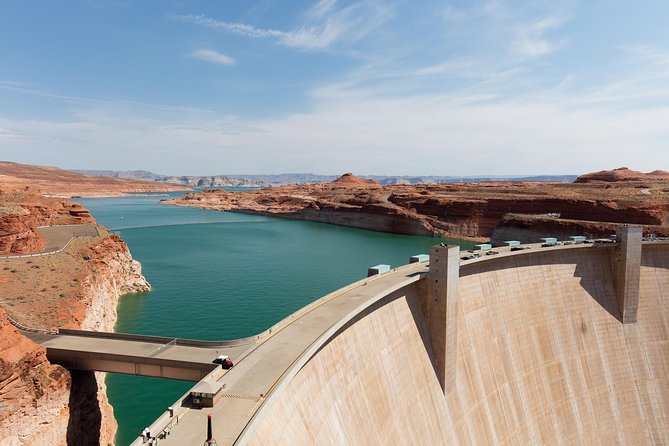
The Hoover Dam visit comes early on day four, with about 30 minutes at the dam and another 30 minutes at the Hoover Dam Bypass. That is enough for a look, photographs, and a basic sense of the engineering scale. It is not enough for a long technical visit or an unhurried walk through every viewing area.
The early start, listed in one account as around 6:15 a.m., may work well in warm weather and leaves the afternoon free in Las Vegas. It also means this day can feel oddly divided: a short morning excursion followed by many free hours. That is good if you want to see a show, visit another hotel, or rest. It is less useful if you prefer a full guided day.
I would plan this afternoon before departure. Las Vegas offers too many choices to leave everything until the last minute, but the tour does not include your entertainment or most meals. The free time is yours, so use it for something the group schedule cannot provide.
Sedona, Oak Creek Canyon, and Route 66
Day five is when the trip changes character. The route crosses the Mojave Desert and the Colorado Plateau, follows historic Route 66, and reaches Sedona, known for red rock formations and striking high-desert views.
Oak Creek Canyon is the scenic centerpiece. The road drops about 2,000 feet to the valley floor, with an overlook and a stop at Slide Rock State Park. The schedule also includes time in Sedona for lunch, shops, galleries, boutiques, and American Indian arts and crafts.
The Chapel of the Holy Cross is visited independently, using a local shuttle service. Admission is not included, so carry money for that extra cost. The chapel’s setting among the red rocks is the point, and the short visit pairs well with views toward Bell Rock, Courthouse Butte, and Cathedral Rock.
The stop at Bell Rock and the view of Cathedral Rock are brief, around ten minutes each. That is enough for photographs, not for a proper trail walk. You should also expect a long day on the road before reaching Flagstaff for the night.
One practical warning: the schedule can slip. At Sedona, a delay getting the vehicle’s television working reportedly held the group for about 20 minutes, and a multilingual guide may spend a long time translating. The result can be less time at the next stop. For this reason, wear shoes you can walk in, but do not plan a separate evening activity in Flagstaff.
Horseshoe Bend and the red-rock heart of the West
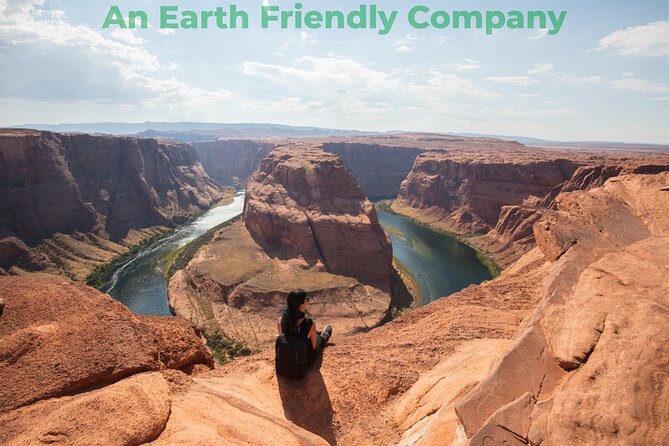
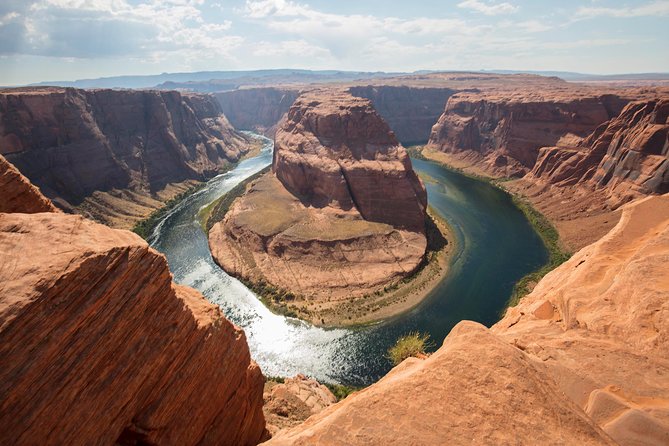
Day six brings one of the trip’s most memorable walks. Horseshoe Bend takes about an hour and requires a walk to the overlook. The Colorado River curves around the sandstone in a near-perfect horseshoe, and the view is powerful because it is so simple: river, cliff, sky, and a great sweep of stone.
This is not a sit-on-the-bus photo stop. The tour requires a reasonable fitness level, and the overall route requires you to walk about 1.5 miles over uneven surfaces. Heat, sun, and rough ground can make short walks feel longer, so bring water and protect yourself from the sun.
Monument Valley follows, with about three hours for a Navajo-led jeep tour. This is one of the most valuable inclusions. Instead of seeing the famous buttes only from the highway, you travel into the valley with a local Navajo guide. The formations rise hundreds of feet above the surrounding desert, and the jeep route gives you a much closer view of the sandstone walls, mesas, shrubs, and open spaces.
The timing is still tight. Three hours sounds generous, but it includes the jeep experience within a day of long-distance travel. Still, this is the kind of stop that justifies the tour. The scenery is distinctive, and the local guide adds context that a quick roadside stop cannot provide.
Antelope Canyon and Valley of Fire
Day seven starts with Lower Antelope Canyon, though the upper or lower canyon may be used depending on weather and crowd conditions. The canyon is shaped by water, wind, and sand, creating smooth walls and narrow passages where light changes the color and texture of the rock.
The visit lasts about 90 minutes. You should expect uneven ground and a walking experience rather than a simple bus stop. The canyon choice is not fully fixed, so do not book this tour only because you have your heart set on one specific section.
After Antelope Canyon, the route returns toward Las Vegas, with lunch along the way and a stop at Valley of Fire State Park. The red sandstone formations were shaped from shifting sands and dunes during the age of the dinosaurs, and strong sunlight can make the rock appear to glow.
Weather affects the visual effect, and the timing aims for the best light. The park visit lasts about an hour, so you will see the key formations without turning the day into a hiking trip. Arrival in Las Vegas is expected in the early evening, but traffic, weather, and road conditions can change the schedule.
Guides, languages, and the human side of the tour
The tour is offered in English, Italian, Spanish, Portuguese, French, German, Hebrew, Japanese, and Chinese. A multilingual format opens the trip to a wider mix of people, but it can also mean longer microphone time and less continuous English commentary.
One guide, Stephano, was described as experienced but difficult to understand in English. Another guide, Roberto, was described as friendly and effective, while a guide on the final small bus had to translate into three languages for a long stretch. The guide quality can vary from departure to departure, so I would not book this expecting a single consistent escort for all seven days.
The group can also change during the route. One account describes three guides and three drivers over the week. That is common on a complex one-way operation, but it reduces continuity. The strongest part of the trip is the route itself and the local Monument Valley jeep guide, not a single tour host who stays with you throughout.
Hotels, meals, luggage, and daily comfort
Six hotel nights with tax and continental breakfast are included. You share only with people on your own reservation, and a maximum of three people can be booked in one room. Parties of four or more need separate reservations and should note that they are traveling together.
Hotels may be replaced by properties of an equivalent category. The practical value is clear: you do not need to find six hotels across three states, and you avoid the daily chore of checking availability in major tourist areas.
Meals beyond the included breakfasts are your responsibility. Vegetarian and other dietary needs can be accommodated, but the tour does not cover lunch or dinner. The daily road stops provide chances to buy food, and the schedule should give you options, though not always much time.
Luggage is limited to one piece and one small carry-on per person. There is no stated size or weight restriction, but pack as if storage is tight. A soft-sided bag is easier to manage than a bulky hard case. Comfortable walking shoes are essential, and the air conditioning can be unpredictable, so keep a light layer within reach.
Is the $1,465 price good value?
At $1,465 per person, the price is not cheap, but it covers six nights of hotels, six breakfasts, transportation, a Bay cruise, a Monument Valley jeep tour, and several admission fees. Add up the cost of a rental car, fuel, one-way drop charges, hotels, and guided visits, and the package can make sense.
The real saving is effort. You do not need to drive long desert distances, plan routes across unfamiliar states, or find parking at major sights. You also get a local Navajo jeep tour, which would require separate planning.
The tradeoff is control. You pay for a fixed schedule and accept short stops, possible vehicle changes, multilingual commentary, and early departures. If you are comfortable driving and want to hike, linger, or choose your own hotels, independent travel may suit you better. If driving across the Southwest is not realistic, this price buys access to a very ambitious route.
Who should book this tour?
Book it if you want maximum scenery in one week, do not want to rent a car, and are happy to trade slow travel for coverage. It suits first-time visitors to the American West, solo travelers who prefer an organized route, and couples or small groups who want hotels and transport arranged in advance.
Think twice if you need generous free time, consistent English guiding, quiet travel days, or a comfortable coach at all times. The tour requires moderate fitness, early mornings, long transfers, and flexibility when the group, vehicle, or canyon choice changes.
My verdict is positive, with clear conditions. The San Francisco Bay views, Sedona rocks, Horseshoe Bend, Monument Valley, Antelope Canyon, and Valley of Fire give you a remarkable visual tour of the Southwest. Book it for the route and the convenience, not for a relaxed pace or polished personal guiding from the same person each day.
FAQ
Does the tour return to San Francisco?
No. It is a one-way journey that begins in San Francisco and ends in Las Vegas.
Where does the tour begin?
The meeting point is 100 Larkin Street in San Francisco, with an 8:30 a.m. start. Hotel pickup is not included.
Where does the tour end?
The tour ends at the Luxor Hotel, 3900 South Las Vegas Boulevard, Las Vegas.
Is hotel accommodation included?
Yes. Six nights of hotel accommodation, hotel tax, and continental breakfast are included. Equivalent hotels may be substituted if the listed hotel is unavailable.
How much luggage can I bring?
You may bring one piece of luggage and one small carry-on per person. The tour does not state a size or weight limit.
Will I travel by bus or van?
You may travel by air-conditioned coach or van, depending on group size. Wi-Fi is available on full-size coaches only.
Can children join the tour?
The minimum age is seven. Infants and toddlers are not permitted.
Is the tour available in languages besides English?
Yes. Tours operate in English, Italian, Spanish, Portuguese, French, German, Hebrew, Japanese, and Chinese. You must request your language when booking.
Newest San Francisco write-ups
- Yosemite Valley: 3-Day Lodging Adventure★ 4.9 · 9 reviews
- From San Francisco: Yosemite & Tahoe Sierras 4-Day Trip★ 5.0 · 4 reviews
- San Francisco: Turkish Mosaic Lamp Workshop★ 4.2 · 12 reviews
- From San Francisco: Yosemite Private Full-Day Trip★ 5.0 · 13 reviews
- San Francisco Airport 1-Way Transfer to/from the City★ 4.8 · 36 reviews
- Hop-On Hop-Off Deluxe Bus Tour of San Francisco: 2 Days, 20 Stops★ 3.5 · 12 reviews
- Redwoods of Marin and Mt. Tamalpais Walking Tour with Local Guide★ 5.0 · 9 reviews
- Yosemite and Tahoe from San Francisco: 4 Day Sierra Nevada Tour★ 5.0 · 13 reviews
Tours, compared.
Big Bus SF: Hop-on Hop-off Tour with 17 Stops and Sunset Option
Read our review →
Napa and Sonoma Wine Country Full-Day Tour from San Francisco
Read our review →
Hop-On Hop-Off Sightseeing Tour with 17 Stops
Read our review →
Yosemite Highlights & Giant Sequoias Day Tour from San Francisco
Read our review →
Combo Tour: Alcatraz Island and San Francisco Grand City Tour
Read our review →
Monterey, Carmel and 17-Mile Drive: Full Day Tour from SF
Read our review →