

Reviewed · HAIGHT-ASHBURY TOURS
“Summer of Love” tour in Haight-Ashbury in French
Haight-Ashbury is more than a famous intersection and a few psychedelic shop signs. This French-language walk connects the Beatnik movement, New York Hipsters, and the 1967 Summer of Love into one clear story, then places that story among the district’s Victorian houses. It is a useful way to understand why this San Francisco neighborhood became a symbol known around the world.
I like two things right away: the tour is limited to 10 people, and the guide, Gilles, uses anecdotes and supporting images to make the past easier to follow. I also like that the walk goes beyond music and fashion, touching on the development of San Francisco and the wider American counterculture. The main consideration is the price, $62.78 per person, plus a suggested tip, for a walking tour concentrated in one neighborhood.
Key points to know before you book

- French-language focus: The entire experience is designed for French speakers who want a clear, lively account of American counterculture.
- A compact Haight-Ashbury route: You spend roughly two to two and a half hours around one of San Francisco’s most symbolic districts.
- Victorian homes with famous connections: The walk points out places associated with Janis Joplin, Jimi Hendrix, the Grateful Dead, and the Hells Angels.
- Gilles brings historical context: His approach combines anecdotes, images, and a wider story about San Francisco and the United States.
- Small group size: The maximum is 10 people, which should make questions and conversation easier.
- Budget for a tip: A tip of about $10 per person or 15 to 20 percent is suggested, adding to the listed price.
Why Haight-Ashbury needs more than a quick photo
Many people reach Haight-Ashbury, take a picture at the corner, look at the colorful storefronts, and move on. That gives you the label, but not much of the story. The neighborhood matters because several strands of American culture came together here: literature, music, youth rebellion, experimental lifestyles, and opposition to the social order of the 1960s.
This tour gives you a short way into that larger story. You begin with the roots of the counterculture, including New York Hipsters and Beatniks, before following the movement west to California. That sequence matters. It shows that the Haight did not appear out of nowhere in 1967. It grew from earlier artistic and social movements.
I like this approach because it gives you a framework for the streets you are seeing. Instead of treating the district as a collection of famous names, the guide can explain how a particular era developed and why so many young people were drawn to San Francisco.
The tour is conducted in French, which is its central advantage for French-speaking visitors. Historical explanations are easier to absorb in your strongest language, especially when the subject includes American slang, political references, music, and several decades of social change.
More Haight-Ashbury walks:
- Love & Haight – San Francisco’s Bohemian Past
★ 5.0 · 17 reviews - 4-Hour Painted Ladies and Haight-Ashbury GoCar Tour
★ 5.0 · 15 reviews - San Francisco: True Crime Tales from the Haight
★ 4.7 · 14 reviews
Starting at Fell Street and entering the Haight

The meeting point is 1788 Fell Street, with a 10:00 a.m. start. From there, the walk heads into Haight-Ashbury, an area lined with Victorian houses and closely tied to the 1960s counterculture.
You should arrive ready to walk outdoors for the full visit. The experience is not built around an indoor museum or a single admission site. The streets themselves are the setting, and the free admission listed for the neighborhood means your payment is for the guide’s interpretation rather than entry tickets.
That distinction helps explain the price. You are not paying for a series of attractions with separate admissions. You are paying for a local French guide who organizes the history, points out relevant places, answers questions, and helps you read a neighborhood that can otherwise feel scattered.
The start and end points are not identical. The tour finishes at the Homeless Youth Alliance at 1770 Haight Street, near the Free Medical Clinic at 555 Clayton Street. Check both locations before you leave your hotel, since a short walk between the end point and your next stop may be part of your plans.
What the Summer of Love story covers
The central subject is the Hippie movement and the remarkable summer of 1967, when Haight-Ashbury became a magnet for young people from across the United States. The tour places that event within the development of American counterculture rather than presenting it as a simple party from the past.
You can expect the guide to explain how the movement grew from earlier Beatnik and Hipster circles, then took on a distinct Californian character. The story includes ideas, music, community life, and the people who gave Haight-Ashbury its lasting reputation.
That broader view is one of the tour’s strongest features. A purely music-focused walk might concentrate on bands and recording careers. A purely architectural walk might point out Victorian houses. This experience links the two, showing how ordinary streets became associated with an extraordinary period.
The supplied material also describes the experience as a kind of live documentary, with anecdotes and images used to support the explanation. That detail is useful for you as a potential customer. If you prefer a guide who tells a chronological story and supplies context, rather than simply naming buildings, Gilles’s style should suit you.
At the same time, you should keep your expectations in check. The walk lasts around two hours and thirty minutes, so it cannot offer a full academic treatment of the 1960s. It is a focused introduction, not a university course or a complete survey of every political and cultural group connected to the era.
Victorian houses and famous residents

Haight-Ashbury’s Victorian buildings give the tour a physical setting. You are not hearing about the neighborhood from a distant lecture hall. You are walking streets where the architecture helps explain the character of the district.
The route includes houses connected with major figures from the period. Janis Joplin, Jimi Hendrix, the Grateful Dead, and the Hells Angels are all part of the story. These names cover different sides of the Haight: music, performance, communal life, and the rougher edge of the counterculture.
The buildings are important less as grand attractions than as points of memory. The appeal comes from learning who lived in the neighborhood and how those people fit into the movement. I find that more useful than simply being told that a famous person once passed through a street.
Do not expect every stop to function like a formal museum. The tour is a neighborhood walk, and its value depends on the guide’s ability to connect locations with events and personalities. That is why the French explanation and Gilles’s storytelling approach matter so much.
You will also want to distinguish historical associations from preserved interiors. The information provided identifies homes and residents, but it does not promise access inside private buildings. Treat the houses as exterior landmarks and listen for the stories tied to them.
A different sort of San Francisco day, for when the fog rolls in:
- Muir Woods and Sausalito (Return by Bus or Ferry)
★ 4.5 · 5,098 reviews - Big Bus SF: Hop-on Hop-off Tour with 17 Stops and Sunset Option
★ 4.0 · 4,539 reviews - Napa and Sonoma Wine Country Full-Day Tour from San Francisco
★ 4.5 · 4,455 reviews - Small Group Yosemite and Giant Sequoias Day Trip from San Francisco
★ 5.0 · 3,671 reviews
A small group changes the feel
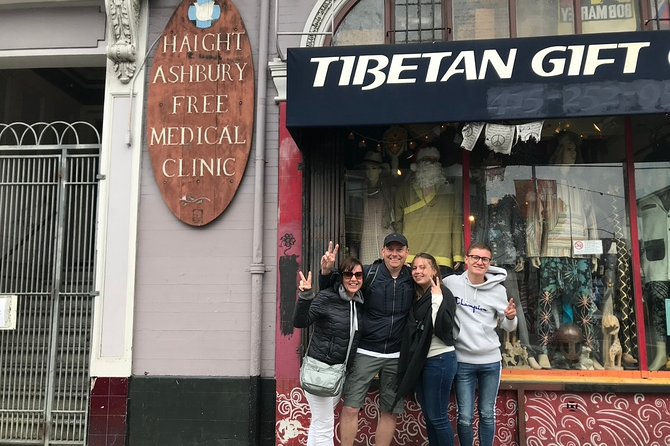
The maximum group size is 10 people. That is a useful limit in a residential district where sidewalks, street corners, and small gathering points can become awkward with a large crowd.
A group this size can also make the tour feel more conversational. You have a better chance to ask Gilles about a musician, a movement, or a detail that catches your attention. The format should appeal to you if you prefer a personal walk over a large, heavily scripted group.
Small groups do not guarantee a private tour. The experience requires a minimum number of participants, so it may not run if too few people book. If that happens, you are offered another date or a full refund.
The tour also allows service animals and is near public transportation. Most people can participate, according to the supplied details, but the walk takes place in city streets and requires outdoor movement for the duration. If you need a highly tailored pace or extensive seating, confirm that before booking.
How the price compares with the experience
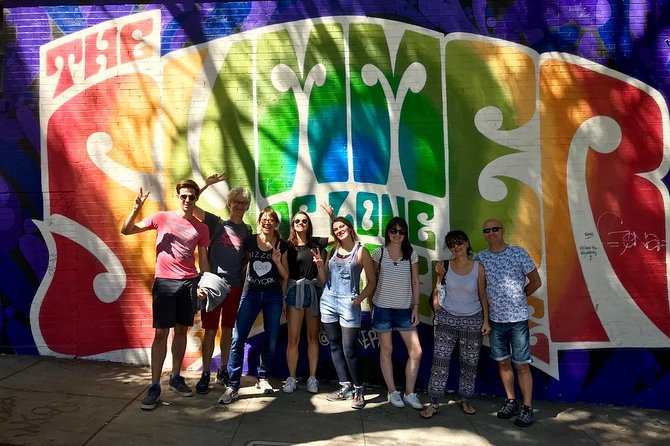
At $62.78 per person, this is not a bargain-priced neighborhood stroll. The listed price includes the guided tour with a local French guide, but not a tip. The suggested gratuity is about $10 per person or 15 to 20 percent of the amount paid, so plan on an additional cost.
I think the value depends on what you want from Haight-Ashbury. If you only need the famous intersection and a few quick photographs, you can explore the area without paying for a guide. If you want a coherent account of the counterculture in French, the fee becomes easier to justify.
The tour also covers a substantial amount of material in a fairly short period. Gilles’s subject is not just one band or one block. He connects San Francisco’s origins, the development of the city, the Beatnik period, and the Hippie era. That wider context is where the price earns its keep.
Still, you should not book it expecting admission to several attractions, food, drinks, transportation, or a private vehicle. None of those are included. The cost is for interpretation and company on foot.
Who will get the most from this French tour
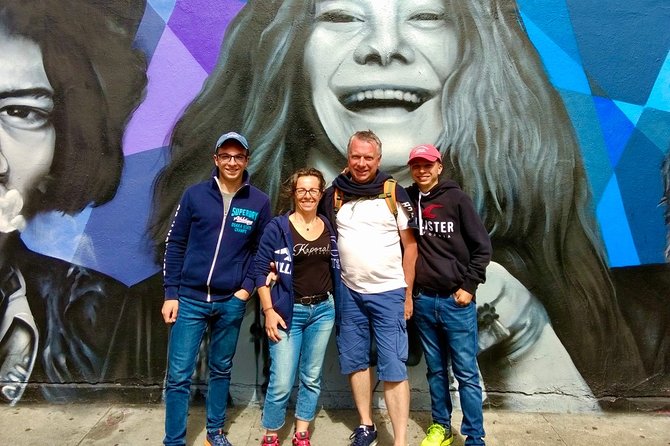
This experience is a strong match for French-speaking adults who want more than a surface-level look at San Francisco. It should also suit anyone fascinated by American music, social movements, literature, or the changing identity of cities.
You will likely appreciate it most if you enjoy stories with a clear historical arc. The route links New York Hipsters and Beatniks to California’s Hippies, then places well-known names within that progression. That makes the visit useful early in a San Francisco stay, when you are still learning how the city’s neighborhoods fit together.
It is also a good choice for people who prefer a local guide to a self-guided audio walk. Gilles’s method, based on anecdotes and images, gives you a human voice and room for questions.
I would be more cautious if your main interest is architecture. The Victorian houses are an important part of the route, but the main subject is the Hippie movement. Likewise, if you want a long, slow visit with many interior stops, this compact walking format may feel too concentrated.
Timing, weather, and practical planning

The start time is 10:00 a.m., and the listed duration is approximately two hours and thirty minutes. The itinerary also describes about two hours in Haight-Ashbury, so allow at least the longer estimate and leave extra time afterward before making a fixed appointment.
The experience requires good weather. The guide can cancel in poor conditions, in which case you are offered another date or a full refund. This is sensible for an outdoor walk, but it means you should avoid building an inflexible schedule around it.
Confirmation is sent within 48 hours of booking, subject to availability. The activity uses a mobile ticket, so keep your booking accessible on your phone.
The cancellation rule is strict: the experience is non-refundable and cannot be changed for any reason if you cancel or request an amendment. That is the main booking risk. Check your date, group plans, and arrival schedule carefully before paying.
What the praise tells you about the guide
The strongest positive theme is the quality of the historical explanation. The walk is described as a dense but fast-moving account that covers San Francisco’s creation and the Hippie period in one concentrated visit.
Another repeated strength is Gilles himself. The feedback describes him as passionate, friendly, and able to offer a wider perspective on both the city and American history. One especially useful description compares the experience to a live documentary, supported by anecdotes and images.
That tells you how to approach the tour. Do not expect a simple list of addresses. Expect a guide-led interpretation in which the places provide prompts for a larger story.
The feedback also includes a Zoom version of the experience, with images used to explain San Francisco. That may indicate that Gilles is comfortable presenting historical material through visual support, though the product described here is the in-person Haight-Ashbury walk. For the live visit, the streets and Victorian buildings provide the setting.
Should you book the Summer of Love tour?
Book it if you want a French-language history walk that explains why Haight-Ashbury became famous, not just where to take a photograph. The small group, the focus on Victorian homes, and Gilles’s story-led approach give the experience a clear purpose.
The $62.78 price is fair only if you value interpretation. Add the suggested tip, accept the strict cancellation terms, and remember that this is an outdoor neighborhood tour with no included admissions.
For a French speaker interested in San Francisco, American counterculture, and the people connected with the Summer of Love, I would consider it a worthwhile two to two and a half hours. If you prefer to wander alone, focus mainly on architecture, or keep costs as low as possible, explore Haight-Ashbury independently instead.
FAQ
Is the tour conducted in French?
Yes. The experience is a guided walking tour in French with a local French guide.
How long does the tour last?
The duration is approximately two hours and thirty minutes. The Haight-Ashbury portion is also listed as about two hours, so allow at least two and a half hours in your schedule.
Where does the tour begin?
The tour begins at 1788 Fell Street, San Francisco, California 94117, at 10:00 a.m.
Where does the tour end?
It ends at the Homeless Youth Alliance, 1770 Haight Street, near the Free Medical Clinic at 555 Clayton Street.
What is included in the price?
The price includes a guided tour with a local French guide. Admission to the Haight-Ashbury neighborhood is free.
Can the tour be canceled because of weather or too few bookings?
Yes. Poor weather or failure to reach the minimum number of participants can lead to cancellation. In either case, you are offered another date or a full refund.
Newest San Francisco write-ups
- Yosemite Valley: 3-Day Lodging Adventure★ 4.9 · 9 reviews
- From San Francisco: Yosemite & Tahoe Sierras 4-Day Trip★ 5.0 · 4 reviews
- San Francisco: Turkish Mosaic Lamp Workshop★ 4.2 · 12 reviews
- From San Francisco: Yosemite Private Full-Day Trip★ 5.0 · 13 reviews
- San Francisco Airport 1-Way Transfer to/from the City★ 4.8 · 36 reviews
- Hop-On Hop-Off Deluxe Bus Tour of San Francisco: 2 Days, 20 Stops★ 3.5 · 12 reviews
- Redwoods of Marin and Mt. Tamalpais Walking Tour with Local Guide★ 5.0 · 9 reviews
- Yosemite and Tahoe from San Francisco: 4 Day Sierra Nevada Tour★ 5.0 · 13 reviews
Haight-Ashbury Tours, compared.


San Francisco Haight Ashbury Hippie Exploration Game
Read our review →
Browse the lists this tour appears in