
Reviewed · CASTRO DISTRICT TOURS
San Francisco: Castro & LGBTQ Private Walking Tour
The most important part of this tour is its subject: the Castro is not simply a nightlife district, but a place tied closely to LGBTQ rights, Harvey Milk, the AIDS epidemic, and the worldwide rainbow flag. A private guide can help you connect those stories to the streets and buildings around you.
I like the one-to-one format and the chance to shape the walk around your interests. I also like that the route includes Harvey Milk Plaza, his former camera shop, and the Castro Theatre, rather than sticking only to general city sightseeing.
The main caution is consistency. Some guests received a warm, flexible introduction to the neighborhood, while one two-hour booking reportedly lasted only an hour and offered little LGBTQ history. You should confirm your guide’s subject knowledge and the planned route before setting out.
Key points to know before booking
- Harvey Milk Plaza begins the story: Start at a major Castro landmark linked to one of America’s best-known LGBTQ civil rights figures.
- Harvey Milk’s shop is a key stop: See the former camera shop and learn why it mattered to gay rights activism.
- The Castro Theatre adds local character: The historic theater and its rainbow flag provide an easy way into the neighborhood’s public identity.
- Private means flexible: You can ask for more focus on activism, architecture, AIDS history, local sights, or general San Francisco advice.
- Two hours goes quickly: The tour is a focused introduction, not a full museum visit or a long city walk.
- Guide quality matters: The experience can be excellent with a prepared guide, but expectations should be clear before you begin.
Why the Castro makes a meaningful walking tour
The Castro is one of San Francisco’s most recognizable neighborhoods, but its importance is not limited to colorful flags and evening entertainment. The streets tell a story about LGBTQ people creating community, organizing for civil rights, facing hostility, and responding to the AIDS epidemic.
That makes a walking tour useful. You are not only looking at buildings. You are hearing why particular places matter and how a district became a refuge for LGBTQ people. The tour is designed to put those stories in the places where they unfolded.
I especially like the private format here. A large group can make a sensitive subject feel hurried or impersonal. With your own guide, you can ask direct questions, pause when a story catches your attention, and adjust the balance between history and sightseeing.
Still, two hours is a limited window. You will get an introduction to the Castro, not every chapter of its past. If you want a detailed study of local politics, the AIDS epidemic, or San Francisco architecture, use the walk as a starting point and ask your guide for more specific recommendations.
More ways to see the Castro:
- San Francisco Urban Hike: Castro and Twin Peaks
★ 5.0 · 71 reviews - San Francisco Castro Mission Loop Tour
★ 5.0 · 12 reviews - Castro District LGBTQ+ Historic Tour
★ 5.0 · 9 reviews
Harvey Milk Plaza gives the walk its focus
Meet your guide outside The Hotel Castro, then begin at Harvey Milk Plaza. This is a sensible starting point because it places civil rights at the center of the experience from the first minutes.
Harvey Milk is closely associated with the Castro and with LGBTQ political activism. At the plaza, your guide can explain his role and the meaning of the site. For many people, this is the moment when the neighborhood changes from a collection of shops and bars into a place with a strong political story.
I would take time here rather than treating the plaza as a quick photo stop. Ask your guide how the area changed, how Milk became connected to the neighborhood, and which local sites best explain his work.
The exact amount of detail depends heavily on the guide. One booking described a guide named Chet as friendly, fun, and well informed about San Francisco in general, but not prepared enough on Castro or LGBTQ history. That is a useful warning: a pleasant personality helps, but it does not replace preparation for a specialist tour.
Harvey Milk’s home and camera shop
The route continues to Harvey Milk’s former residence and camera shop. This stop matters because it connects public activism with ordinary neighborhood life. The camera shop was not only a business. It became an important site for organizing and for the gay rights movement.
You should expect your guide to explain what happened at the shop and why it became such a meaningful address. There is also a plaque marking the location, so pay attention to the pavement and building fronts. One guest found the shop only after asking directly and having the guide search for it, which suggests you should not assume every guide will point it out without prompting.
That detail is more than a minor navigation issue. If a place is one of the main reasons you booked the tour, you want the guide to identify it clearly and explain its importance on the spot. Ask to see the exact former shop location if it is not included early in the walk.
For visitors with a personal connection to LGBTQ history, this may be the most affecting stop. It is also the kind of place you might miss if you simply walk through the Castro on your own.
The Castro Theatre and the public face of the district
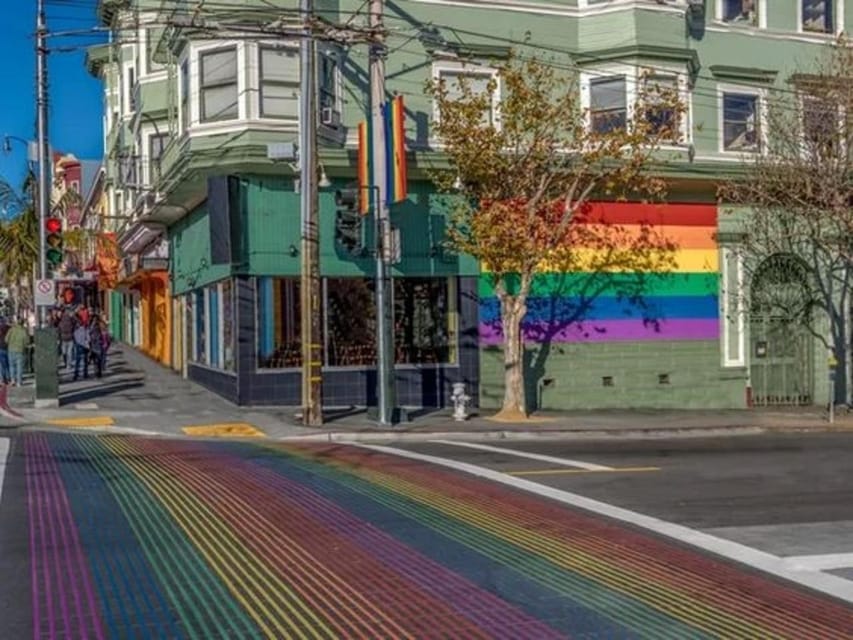
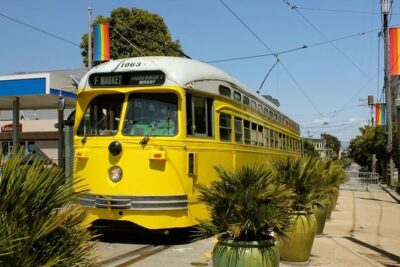
The historic Castro Theatre is another central stop. Its rainbow flag offers a clear visual link between the neighborhood’s past and its present identity.
Your guide will discuss the theater and the way the rainbow flag became an international sign of LGBTQ pride. The flag is familiar around the world, but learning about its local connection gives it more meaning. Here, a simple symbol becomes part of a story about visibility, solidarity, and public space.
The theater also helps broaden the tour beyond political biography. The Castro is a neighborhood of buildings, gathering places, entertainment venues, and street life. A stop at the theater lets you consider how culture and community identity work together.
The tour does not include entry to monuments, museums, or other attractions. Treat the theater as an exterior stop unless your chosen arrangement says otherwise. The experience is mainly about walking, looking, and listening rather than going inside paid sites.
More walking tours around San Francisco:
- North Beach & Little Italy Walking Tour: Food, History & Flavor
★ 5.0 · 1,044 reviews - San Francisco Chinatown Walking Tour
★ 5.0 · 778 reviews - San Francisco LGBTQ Walking Tour with Local Guide
★ 5.0 · 600 reviews - Chinatown Walking Tour: Food, History & Flavor
★ 5.0 · 575 reviews
Stories of community, activism, and the AIDS epidemic
A strong version of this tour should explain how the Castro became a sanctuary for LGBTQ people and how the community responded during the AIDS epidemic. Those subjects give the neighborhood weight, but they also require care.
You can expect discussion of both hardship and achievement. The tour is not only about celebratory symbols. It also addresses discrimination, loss, organizing, and the work required to make the neighborhood safer and more visible.
This is one reason a private guide can be helpful. You can decide how much time to spend on social history, political activism, personal stories, or the physical neighborhood. You can also ask questions that may not fit comfortably into a large group.
At the same time, the description promises a broad introduction rather than a full academic treatment. If AIDS history is your main reason for booking, say so at the beginning. Ask your guide to make that topic a clear part of the route instead of assuming it will receive equal time.
A private walk that can be adjusted to your interests
Customization is the tour’s best practical feature. You can use the two hours for the advertised Castro and LGBTQ route, or ask for more attention to architecture, general San Francisco sights, local venues, or advice for the rest of your visit.
The guide is also meant to help you find other things to do in the city. This can be valuable on a first visit, especially if you want suggestions matched to your interests rather than a standard list. Ask about places connected to the topics discussed during the walk.
The private group setup makes the conversation easier. You do not have to wait while a large group takes photographs or listen to questions unrelated to your plans. You can also request a slower pace if needed.
There is a limit, though. Customization works only when the guide understands both your interests and the neighborhood. If the guide is stronger on general San Francisco conversation than on Castro history, you may receive an enjoyable city chat but not the focused cultural tour you expected.
Walking, public transport, and what the two hours cover
This is a walking tour, and car transportation is not included. The tour information also allows walking and public transport, except where a different option is selected. Since the details of that transport choice are not specified, ask before booking if you need anything beyond walking.
The two-hour length is enough for a focused route through the main advertised sites. It is not enough for a leisurely visit to every attraction, a museum stop, and a long trip across the city. Wear comfortable shoes and arrive ready to keep moving.
The meeting point outside The Hotel Castro is straightforward, but you should confirm the exact starting time and route with the provider. Starting times vary by availability.
The tour is listed as wheelchair accessible. That is helpful, but you may still want to discuss the precise route in advance, since street conditions and any public transport sections can affect comfort.
What $100 per person gets you
At $100 per person, this is a premium price for a two-hour walk. You are paying for a private guide, flexibility, local orientation, and a conversation tailored to your group. You are not paying for museum admissions, food, drinks, attraction tickets, or a private car.
The value is strongest if you care about the subject and want personal attention. A couple, family, or small private group can ask questions freely and adjust the focus without being tied to strangers. The price is harder to justify if you mainly want a quick look at the Castro’s main streets, since you can walk through the area independently.
Guide quality is the deciding factor. Several bookings received high marks for an inspired, friendly, attentive, and flexible approach. One guest from Germany particularly valued the personal insight, sensitivity, architecture, and history. Another guest from the Netherlands found the guide inspired and informative about the area.
But the experience has not been uniformly strong. One guest reported an hour-long tour despite booking two hours and felt the guide was poorly prepared. Another enjoyed the guide’s personality and broad knowledge of San Francisco but found little connection to Castro or LGBTQ history. At this price, that gap matters.
How to get the best version of the experience
Before the walk begins, tell your guide exactly what you want from the two hours. You might say that Harvey Milk, the rainbow flag, the AIDS epidemic, architecture, or present-day Castro life matters most to you.
Ask the guide to identify Harvey Milk’s former shop clearly and explain its role. Do not settle for simply passing the intersection or hearing that it is where nightlife happens. The advertised subject calls for more than a general neighborhood stroll.
You can also ask for practical advice about the rest of San Francisco. Since general city guidance is part of the offering, use the final portion of the conversation to ask what else fits your interests.
If you speak French, Italian, or Spanish, you can request a guide in one of those languages. English is also available. The named guide in one experience was Chet, but guide assignments can vary, so do not assume he will lead your booking.
Who should book this Castro walk?
I would recommend it to a first-time San Francisco visitor who wants a personal introduction to the Castro and prefers conversation to a fixed audio guide. It also suits anyone who wants to ask questions about LGBTQ history, Harvey Milk, the rainbow flag, or the neighborhood’s role during the AIDS epidemic.
It is a good fit for private groups who value flexibility and do not mind paying more for personal attention. The wheelchair-accessible format may also help you plan with greater confidence, though discussing the route ahead of time remains sensible.
I would be cautious if you want a specialist-level history tour. The mixed guide performance means you should confirm the guide’s experience with Castro and LGBTQ history before paying the full price. If the provider cannot answer clearly, an independent walk or a more tightly focused museum or history program may offer better value.
Should you book the San Francisco Castro and LGBTQ Private Walking Tour?
Book it if you want a private, adjustable introduction and are prepared to take an active role in shaping the conversation. Harvey Milk Plaza, the former camera shop, the Castro Theatre, and the rainbow flag provide a strong route, and the best guides add warmth, care, and useful city advice.
Do not book it blindly if detailed LGBTQ history is your main priority. At $100 per person, you should expect the full two hours and a guide who can explain the Castro’s political and social importance, not just point out nightlife. Confirm those expectations first, and this can be a meaningful way to begin exploring the neighborhood.
FAQ
Where does the tour meet?
You meet your guide outside The Hotel Castro.
How long does the tour last?
The scheduled duration is two hours.
Is this a private tour?
Yes. It is a private group experience, with no one else added to your group.
Which places are included in the route?
The route includes Harvey Milk Plaza, Harvey Milk’s former residence and camera shop, and the historic Castro Theatre. The guide also discusses the Castro’s LGBTQ history, the AIDS epidemic, and the origins of the rainbow flag.
Which languages are available?
Guides are available in English, French, Italian, and Spanish.
Is the tour wheelchair accessible?
Yes, the experience is listed as wheelchair accessible.
Are attraction tickets, food, or drinks included?
No. Entry to monuments and museums, attraction tickets, food, and drinks are not included.
More walks around San Francisco
- San Francisco: Chinatown Culinary Walking Tour
★ 4.8 · 265 reviews - San Francisco Ghost Hunt Walking Tour
★ 5.0 · 177 reviews - Private Walking Tour of San Francisco
★ 5.0 · 150 reviews - San Francisco: Food Walking Tour of Chinatown & North Beach
★ 4.8 · 148 reviews
More LGBTQ history and nightlife in San Francisco
- San Francisco: Castro District LGBTQ+ History Tour
★ 5.0 · 9 reviews
Newest San Francisco write-ups
- Filoli House & Garden★ 5.0 · 20 reviews
- Fisherman’s Wharf & Pier 39 Food Tour – Includes Full Meal, 3 hrs★ 5.0 · 9 reviews
- San Francisco Four Peaks Tour★ 4.0 · 4 reviews
- Express San Francisco Layover Tour w Airport Pickup and Dropoff★ 5.0 · 6 reviews
- Napa Valley Wine and Food Tasting Tour from San Francisco★ 5.0 · 7 reviews
- Experience the Thrills of Yosemite: 3-Day Package★ 5.0 · 3 reviews
- Early Bird: Electric Scooter Rental to Golden Gate Bridge★ 5.0 · 6 reviews
- San Francisco Gregangelo Museum – Immersive Kids’ Tour★ 5.0 · 5 reviews
Castro District Tours, compared.
Browse the lists this tour appears in